
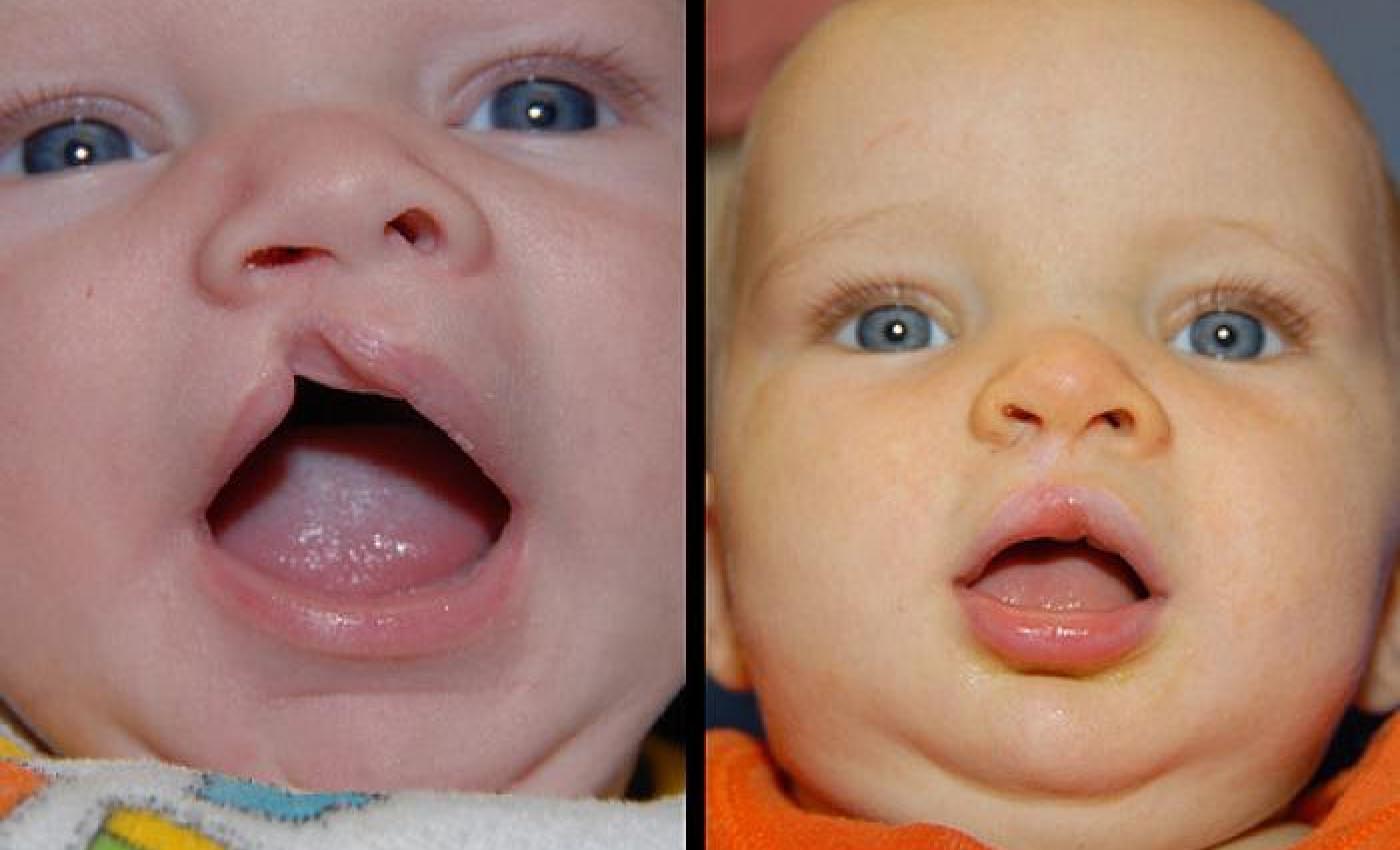
Cleft lip: Birth Defects in Babies
What is a Cleft lip?
A cleft lip is often characterized by a split in the upper lip. It is a result of facial structures developing in an unborn baby that doesn’t close completely. This split often extends beyond the base of the nose and includes the bones of the upper jaw and/or upper gum. Cleft lip generally occurs as a separate birth defect but is very often, also associated with many inherited genetic conditions.
What are the causes of cleft lip?
Cleft lip occurs when tissues in the baby’s face and lips don’t join as they should. The tissues that form the lip fuse together in the first trimester of pregnancy. Although in babies with a cleft lip, the fusion never takes place or does not occur completely, leaving a cleft.
Doctors and researchers believe that majority of the cases of the cleft lip are caused by genetic and environmental factors.
Either of the parents can single-handedly pass on genes that cause clefting, either as an isolated cause, or, as part of a genetic syndrome that includes a cleft lip as one of its signs. In some cases, babies inherit a gene that makes them more likely to develop a cleft, and then an environmental trigger actually causes the cleft to occur.
Diagnosis of Cleft lip
Clefting leads to very prominent physical differences therefore, a cleft lip is pretty easy to diagnose. Prenatal ultrasound can determine if a cleft exists in an unborn child. If not detected during a routine ultrasound prior to the baby’s birth, a physical exam confirms the presence of cleft lip post the child’s birth. Sometimes diagnostic testing may be conducted to determine or rule out the presence of other abnormalities.
Complications related to a cleft lip
A cleft lip can cause several other complications apart from just the appearance change:
Speech problems
Children with a cleft lip tend to have trouble in speaking too. These children’s voices don’t carry well, the voice may take on a nasal sound, and the speech may be difficult to understand. Not all children have these problems and surgery may fix these problems entirely for some. In other cases, a speech pathologist will work with the child to resolve speech difficulties.
Dental Problems
Children with a cleft lip are prone to a greater number of cavities than the average number of cavities and often have missing, extra, malformed, or displaced teeth requiring dental and orthodontic treatments.
Treatments for Cleft lip
A cleft lip may require one or two surgeries depending on the extent of the repair needed. The initial surgery is usually performed by the time a baby is 3 months old.
Additional surgeries may be performed to improve the appearance of the lip and nose. Final repairs of the scars left by the initial surgery will probably not be performed until adolescence when the facial structure is more fully developed.
Final Note
Although treatment for a cleft lip may take over several years and require several surgeries depending upon the involvement, most children affected by this condition can achieve normal appearance, speech, and eating.






Hailey - 1 year ago