
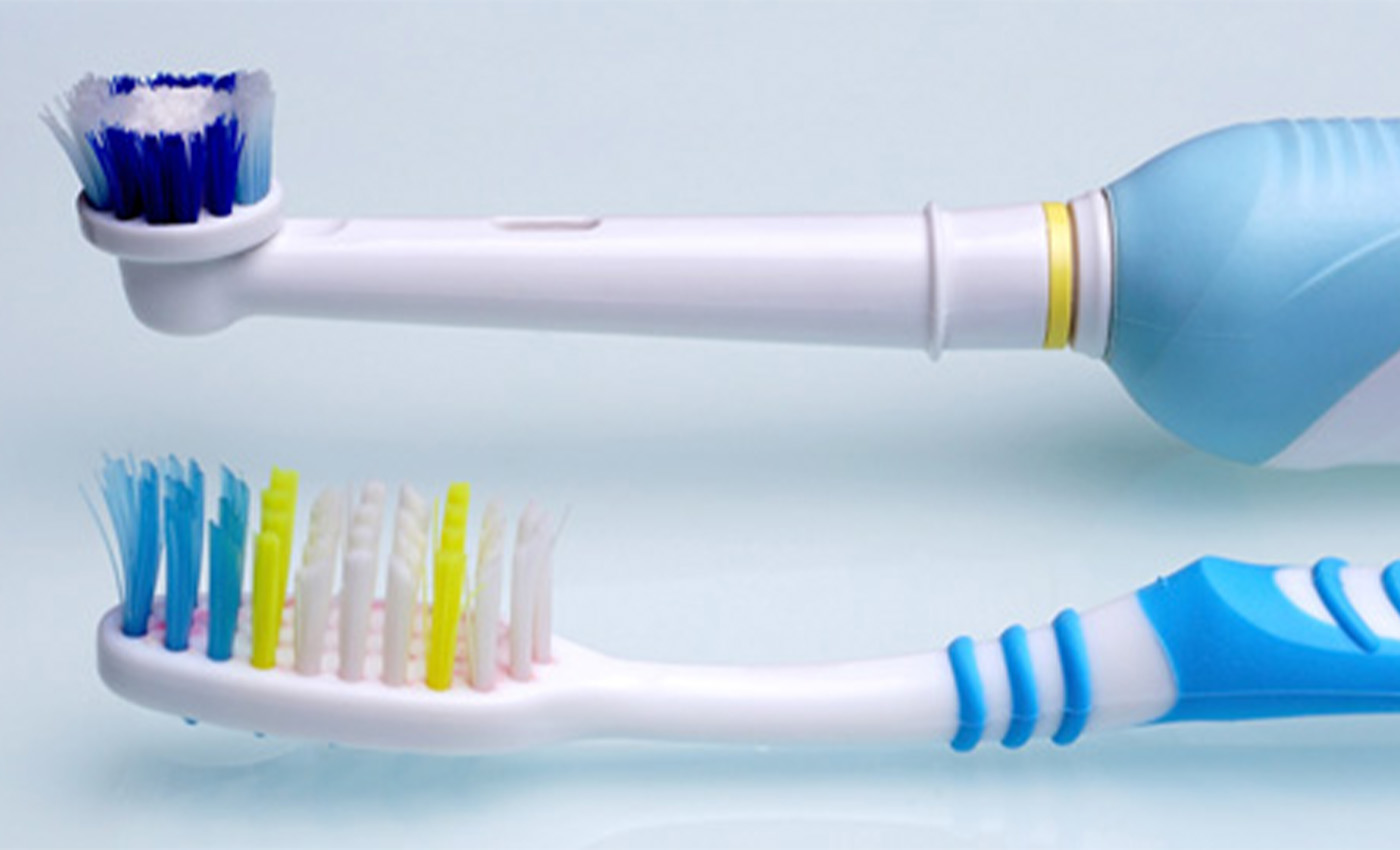
How to select the right toothbrush?
Brushing your teeth is the cornerstone of healthy oral hygiene and disease prevention. According to the Indian Dental Association (IDA), both electric and manual toothbrushes are effective at removing oral plaque that causes decay and disease.Both electric and manual toothbrushes have their own set of advantages. The American Dental Association (ADA) awards a Seal of Acceptance to any toothbrush, electric or manual, proven to be safe and reliable.
Why is an Electric toothbrush better than a manual one?
The bristles of an electric toothbrush vibrate or rotate to help you extract plaque from your teeth and gums. When you pass your toothbrush over your teeth, the vibration allows for further micro-movements.
Easier for people with limited mobility: The majority of the job is done for you by electric toothbrushes. They can be helpful in people who have reduced mobility, such as those who have:
Carpel tunnel
Arthritis
Other developmental disorders
More effective plaque removal: According to a study of research, electronic toothbrushes reduce plaque and gingivitis more effectively than manual toothbrushes. The plaque was reduced by 21%, and gingivitis was decreased by 11% after three months of use. Vibrating toothbrushes seem to perform better than oscillating (rotating) toothbrushes.
Built-In Timers: An electric toothbrush with a timer will help you brush your teeth long enough to remove plaque from your teeth and gums.
Helps people with orthodontic appliances in improving oral health:
According to one report, Electric toothbrushes, according to Trusted Source, were particularly beneficial for people who had orthodontic appliances, such as braces, because they made brushing easier.
Plaque levels were similar in people with appliances that already had good oral health, whether they used an electric toothbrush or not. However, if you find it difficult to clean your mouth while undergoing orthodontic treatment, an electric toothbrush can help.
Harmless fun for kids and safe for gums: Brushing one’s teeth isn’t something that all children enjoy doing. If your child enjoys using an electric toothbrush, it will help them maintain good oral hygiene and develop healthy habits. An electric toothbrush, when used properly, should not damage your gums or enamel but rather encourage optimal oral health.
Helps in waste management: In certain instances, replacing the head of an electric toothbrush is less costly than discarding the whole manual toothbrush. However, if you use a single-use electric toothbrush, you’ll need to replace it completely when it’s time.
Brushing your teeth can help you concentrate better. According to at least one study trusted Source, people were more concentrated when brushing their teeth with an electric toothbrush. This improved people’s overall brushing experiences and can increase how well you brush your teeth.
Cons of Electric toothbrush:
Electric toothbrushes cost more than manual toothbrushes, ranging from Rs. 400 to Rs. 3000 per brush. Replacement brush heads are typically sold in packs of multiples and range from Rs. 200 to Rs. 1500. Electric toothbrushes that are entirely disposable cost Rs. 200 to Rs. 500 plus the cost of batteries.
Finding suitable replacement brush heads may be difficult and inconvenient since not all retailers carry them, and your local stores can not carry the correct brand. You can buy them online, but this isn’t always easy, and it’s not a good choice if you need a replacement head right away. You can stock up and have enough for a year or more, but this will increase the upfront costs.
Electric toothbrushes did not extract significantly more plaque than manual toothbrushes in two trusted Source studies among seniors. This isn’t to say that electric toothbrushes aren’t helpful, but they might not be worth the extra money.
If you fly abroad, plug-in models will not be a good choice because you’ll need a backup travel toothbrush. Even though electric toothbrushes create less waste, they are less eco-friendly than manual toothbrushes since they require electricity or batteries.
The vibrating sensation isn’t for everybody. Furthermore, electric toothbrushes trigger a little more saliva movement in your mouth, which can be messy.
Advantages of using a manual toothbrush
Brushes with manual bristles have been around for a long time. Although they lack the bells and whistles found in many electric toothbrushes, they are still an excellent way to clean your teeth and avoid gingivitis.
If you want to brush with a manual toothbrush, do so as long as you brush twice a day, every day.
Easily accessible and affordable to ordinary people: Almost every grocery store, gas station, dollar store, or pharmacy can sell you a manual toothbrush. They don’t need to be paid to work, so you can use a manual toothbrush whenever and wherever you want. Manual toothbrushes are less expensive than electric toothbrushes. One usually costs between Rs. 15 and Rs. 100.
Cons of Manual toothbrush:
According to a recent report, people who used a manual toothbrush rather than an electric toothbrush were more likely to brush too hard. Brushing your teeth and gums too hard can cause damage. Since there is no built-in timer on a manual toothbrush, it can be more challenging to know whether you’re brushing long enough for each session. To time your brushing sessions, consider putting a kitchen timer in your bathroom.
Toddlers and young children will benefit from using manual brushes:
The toothbrush that your child is most likely to use is the right toothbrush for them. Kids should use a toothbrush with soft bristles and a child-sized head, according to experts. For young children, neither a manual nor an electric toothbrush is inherently better. The advantages and disadvantages of each kind remain the same.
Tips for toddler parents:
If your child is a toddler, you might want to brush them again afterward to ensure that they have brushed all areas of their mouth. Do remember to read our article on oral healthcare for infants and toddlers for more tips.
When do you replace your toothbrush?
According to the Indian Dental Association, all toothbrushes should be checked every three to four months. If your toothbrush is frayed or used when you were sick, you could replace it earlier. When using a manual toothbrush, the whole unit must be replaced. You can only need to replace the removable head on an electric toothbrush.
The proper technique for brushing your teeth:
Brushing your teeth properly and twice a day, every day, are the most critical aspects of the process. Clean your teeth in the following order:
Choose a toothbrush that suits your mouth perfectly.
Firm bristles will irritate your gums, so avoid them. Recommended brushes are the ones with soft bristles. Look for brushes with angled or multi-level bristles.
According to one report, according to Trusted Source, this form of bristle has more effects than smooth, one-level bristles.
Fluoride toothpaste can be used.
Wash the teeth and gums at a 45-degree angle with the brush.
Clean for two minutes on all tooth surfaces (front, back, and chewing).
Rinse your toothbrush and hang it to dry — and keep it out of the way of the toilet, which can spray germs when flushed.
Floss once a day, either after brushing or before brushing.
Mouth rinses are a personal preference and should not be used in lieu of flossing or brushing.
In conclusion:
If you use proper technique and brush for long enough, electric and manual toothbrushes are good at cleaning teeth. Overall, brushing with an electric toothbrush can be quicker, resulting in better plaque removal. If you have any doubts about which toothbrush is right for you, consult your dentist.






Hailey - 9 months ago