
Certificate of participation with 1 CME is available
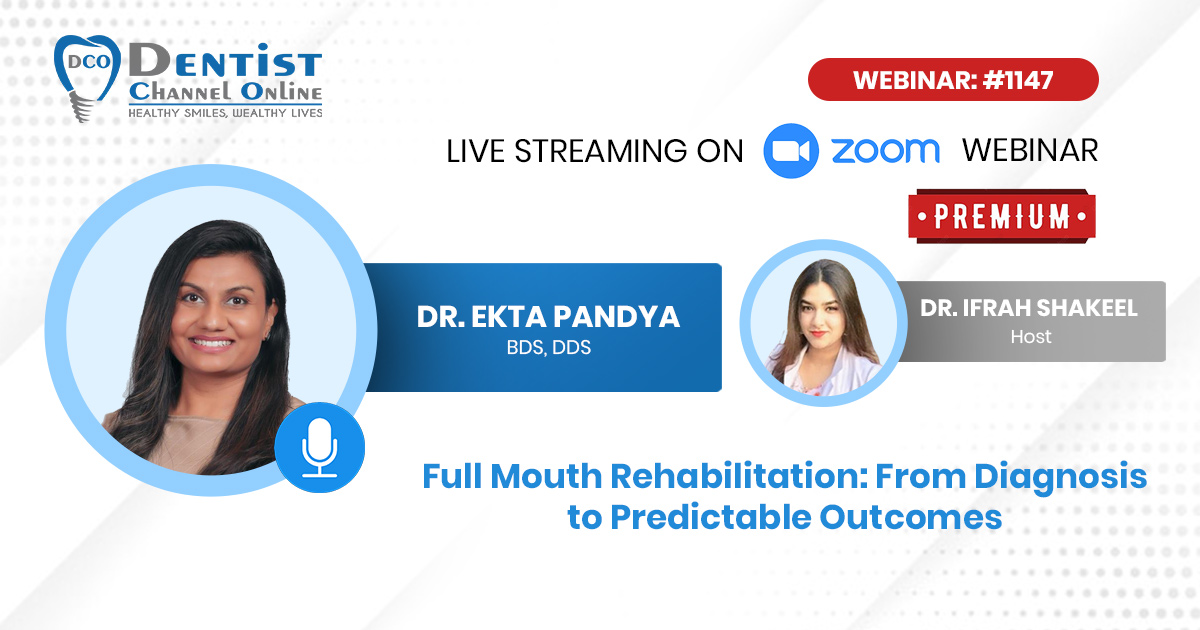
This webinar will provide a comprehensive overview of full mouth rehabilitation with emphasis on diagnostic accuracy, treatment planning consistency, and outcome predictability. It will explore the multifactorial nature of complex cases, including occlusal dynamics, periodontal considerations, restorative prognosis, and patient-specific risk factors. Particular attention will be given to the sources of variability in clinical decision-making and their impact on patient outcomes and practice efficiency. A structured, systems-based approach to treatment planning will be presented, along with discussion on the role of emerging decision-support technologies in enhancing data integration and clinical consistency. The objective is to equip clinicians with practical frameworks to improve diagnostic confidence, streamline treatment sequencing, and optimize patient communication.
Comprehensive treatment planning in full mouth rehabilitation requires the integration of multiple variables—occlusion, periodontal status, restorative prognosis, patient expectations, and systemic health. The human challenge lies not in understanding each component individually, but in consistently integrating them into a cohesive plan.
This lecture presents a structured framework for approaching complex cases, with a focus on reducing variability and improving predictability. Attendees will explore how inconsistencies arise in treatment planning and how they influence patient outcomes and practice performance.
The session will also introduce the evolving role of decision-support systems in dentistry, highlighting how emerging technologies can assist clinicians in processing complex datasets and ensuring a more comprehensive evaluation of each case.
By combining clinical principles with a systems-based approach, this lecture aims to equip dentists with tools to enhance consistency, improve patient communication, and increase confidence in treatment planning.
Date: 09/05/2026 | 08:00 PM IST









Darlisha - 5 months ago