• Dentist Channel Online Dentist Channel Online
  • 2 March, 2022

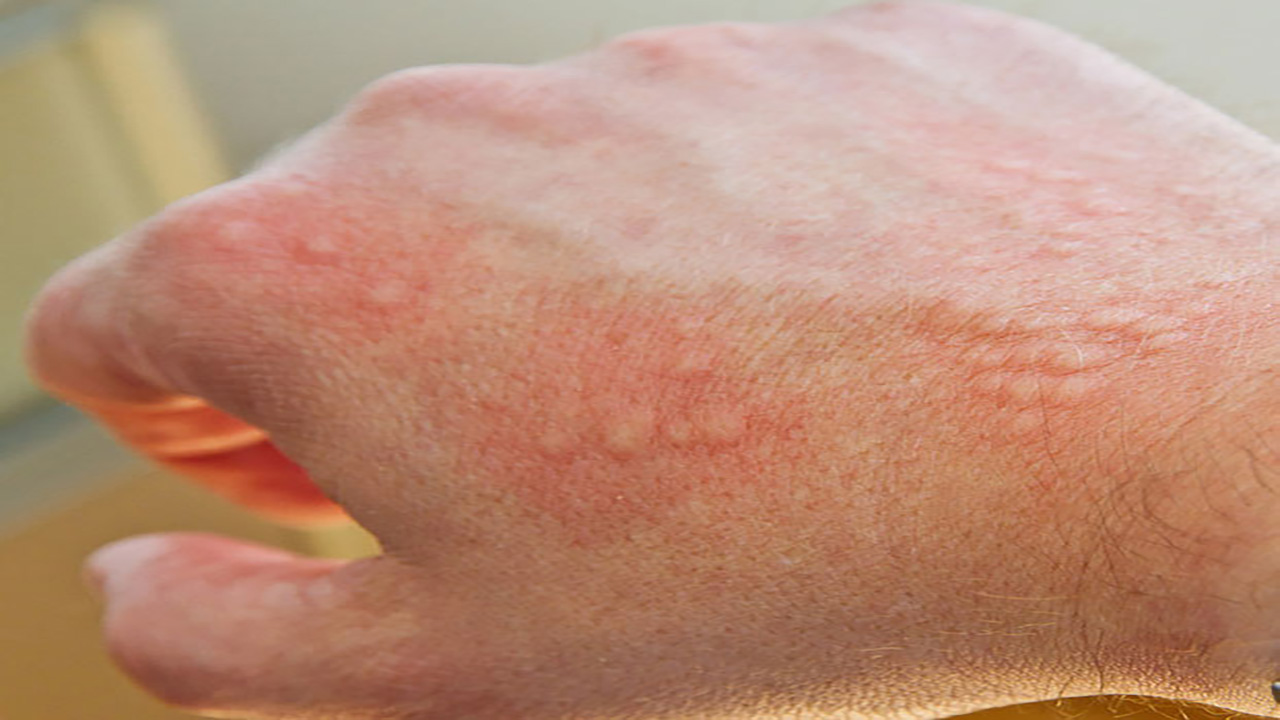
Hypersensitivity Reactions - An Overview


It is defined as a condition where there is exaggerated immune response.  

Causes includes – 

  • Autoimmunity 
  • Reactions against microbes 
  • Reactions against environmental antigens 

Hypersensitivity reactions are of  4 types 

  • Type I – Immediate 
  • Type II – Antibody mediated 
  • Type III – Immune comple 
  • Type IV – T cell mediated 

Components of Immune system - Lymphocytes – B &T cells (CD 4 & CD 8 cells), neutrophils, basophils, eosinophils, mast cells, macrophages and complement system.

Hypersensitivity reaction –Type I 

  • Immune response rapidly develops in a previously sensitised person 
  • Peak action time is 15-30 minutes 
  • Etiology Genetic basis, pollutants and viral infections 
  • Mediated by IgE - mediators from mast cells and basophils 
  • Eg- food, drug allergy, allergic rhinitis, systemic anaphylaxis and local anaphylaxis 
  • Reaction- local, systemic, atopy 

Systemic anaphylaxis includes - administration of antisera e.g. anti-tetanus serum (ATS), administration of drugs e.g. penicillin  and sting by wasp or bee 

Local anaphylaxis includes like hay fever, bronchial asthma due to allergy to inhaled allergens like house dust, food allergy to ingested allergens like fish, cow’s milk, eggs etc, cutaneous anaphylaxis due to contact of antigen with skin, angioedema, an autosomal dominant inherited disorder characterised by laryngeal oedema, oedema of eyelids, lips, tongue and trunk.

Hypersensitivity reaction - Type II 

  • There is reaction of humoral antibodies that attack cell surface antigens and cause cell lysis 
  • The reaction develops in 15-30 minutes 
  • HLA-linked, exposure to foreign / tissue cells is the etiology 
  • Antibody mediated –IgG or IgM 
  • Effector cell – complement, FcR cells(macrophages, NK cells) 
  • Eg Cytotoxic antibodies to blood cells such as transfusion reaction, Cytotoxic antibodies to tissue cells such as Grave’s disease 

Hypersensitivity reaction - Type III

  • Results from deposition of antigen-antibody complexes on tissues within 6 hours 
  • Etiology is persistence of low grade infection, environmental antigens, autoimmune process 
  • Mediated by Immune complex - IgG or IgM 
  • Eg. Immune complex glomerulonephritis, Goodpasture’s syndrome, collagen diseases and drug induced vasculitis 

Hypersensitivity reaction -Type IV 

  • It is a cell-mediated slow and prolonged response, also called as delayed hypersensitivity reaction. The reaction occurs about 24 hours after exposure to antigen and the effect is prolonged which may last up to 14 days 
  • Mediated by T cells 
  • Eg contact allergy, granulomas,tuberculin 
  • Peak action time is after 24 hours 
  • It is cell mediated reaction and CD8+ T cells, cutaneous antigens being the etiology 
  • Eg. includes reaction against microbacterial antigen, reaction against virus infected cells, Reaction against tumor cells 


Article by Dr. Siri P. B.

Categories:
Tags :
Comments :
Hailey Avatar
Hailey - 8 months ago
My name is Hailey Garcia and I am from New Jersey. My herpes virus turned to war after 2 years of living with it. I have tried different medical procedures to cure my herpes but to no avail. Most people think herpes is only a minor skin irritation of which herpes has long term effects on health and passes through the bloodstream and can be easily contracted through sexual intercourse. I knew I had herpes from the first day I started feeling itchy in my pubic area and the pain was very unbearable. I couldn't stand it anymore. After 2 years of trying other means to get rid of it, I had to contact Doctor Odunga to help me with a permanent cure. I saw his email and whats-app number from a testimony I read online from a lady who was also helped by him in curing infertility problems, I had faith and contacted him. He assured me of his work and I ordered his herbal medicine. Within 5 days, I didn't feel any pain anymore and within 2 weeks, my skin was all cleared and smooth. I am very grateful to you sir and I write this testimony as others have done to bring those having faith to you sir. If you have herpes or other similar disease and you want it cured, kindly contact Doctor Odunga, Whats-App (wa.me/+2348167159012) OR Email [email protected]

Authentication required

You must log in to post a comment.

Log in

Upcoming webinars:

  • 18 December,2025
Shoot, Document, Deliver: The Power of Dental Photography

Join our webinar ‘Shoot, Document, Deliver: The Power of Dental Photography’ to master equipment, techniques, and applications for impactful clinical images.

  • 21 December,2025
Minor Oral Surgery, Major Challenges : Clinician’s Guide

Gain practical insights into managing common challenges and complications in minor oral surgery for improved clinical outcomes.

  • 25 December,2025
From failing dentition to fixed function: Advanced full-arch implant restorations with a patient-centered approach

Discover advanced full-arch implant restorations transforming failing dentition with a patient-centered approach.

  • 28 December,2025
In the Loop : Decoding the Matrix Systems

Simplifying the matricing challenges from Flat to Fabulous

  • 1 January,2026
Management of Complications Post Transalveolar Extractions.

This Webinar will cover Management of Various Complications Occurring after Surgical Extractions.

  • 2 January,2026
Basics of Prosthetic Options in Dental Implants

Choosing the right prosthesis is the key to long-term success in implant dentistry.

  • 16 January,2026
Abutment Selection In Implantology- Which, When and Why?

This webinar will briefly discuss various abutment options and their selection process to enhance implant function and longevity.

  • 18 January,2026
Clinical Implications of Proximity of Nerve with Mandibular Third Molars

A Webinar on Evaluating Nerve Proximity Risks during Mandibular Third Molar Surgery for safer Clinical Outcomes.