
What you must consider before Teeth Whitening?
Introduction:
Teeth whitening is one of the most popular cosmetic dental treatments since it is a minimally intrusive and very inexpensive process. Although teeth whitening is not a permanent cure for tooth discoloration, the effects are almost instant and can persist for several months if properly maintained.
When it comes to teeth whitening, most people think of in-office whitening treatments done by a dentist. There are, however, a variety of at-home, do-it-yourself whitening solutions available. We compare these two whitening options in this section, so you can consider the benefits and drawbacks of each.
How it actually plays out:
-Teeth whitening in the office is performed by qualified dental specialists, ensuring safe and consistent bleaching results. Because dentists employ higher-concentration bleaching gels, the effects of professionally delivered in-office whitening are usually better. Zoom, Britesmile, Opalescence, and Lumibrite whitening are some of the most popular in-office whiteners.
-The way they’re applied and how much they cost differs from one product to the next, but the in-office whitening process is quite the same across the board.
-Prior to treatment, your dentist will “prep” your teeth by removing plaque and debris. In addition, a comprehensive dental exam will be performed to ensure that your teeth and gums are in good health. Pre-treatment images may be taken to show you the before and after-effects of the treatment.
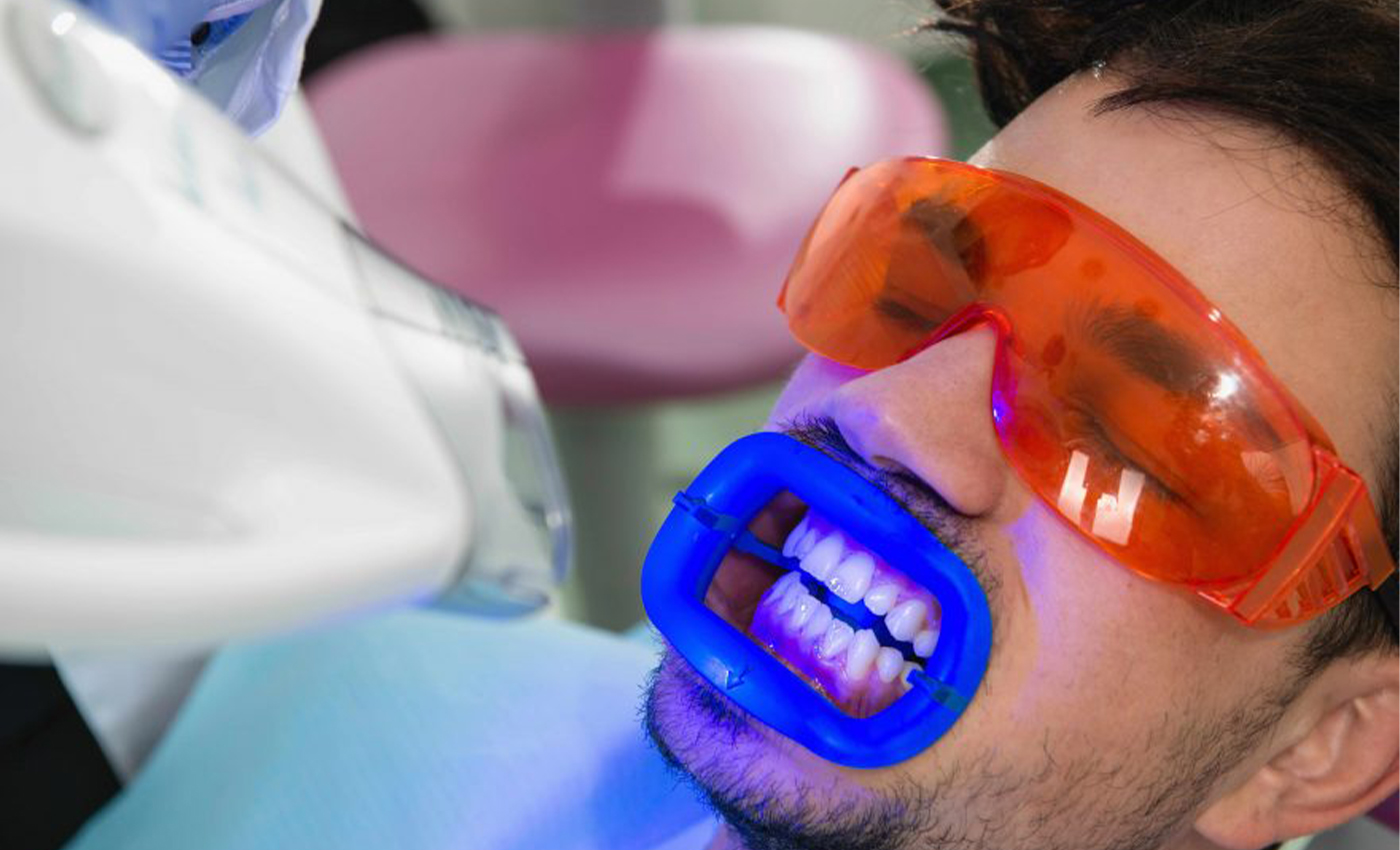
-A cheek retractor is used to expose the teeth before treatment begins. To protect the gum tissue, a liquid rubber dam or hardening resin is placed. The teeth are next bleached with a hydrogen peroxide gel, which is left on for 15 to 30 minutes. After that, the gel is cleaned and reapplied for one or more 15 to 30 minute sessions. A high-intensity light is used in some whitening procedures (such as Zoom) to help activate/enhance the bleaching process. The results will be noticeable right away, while the entire effect of the therapy will take a few days to appear.
-Your dentist will recommend that you avoid specific foods that can cause discoloration in order to enhance the whitening effect.
-You can also get a take-home whitening kit or a whitening pen to help you keep your smile white.
At-Home Teeth Whitening:
-Teeth whitening at home is a do-it-yourself option to professional whitening. At-home whitening is often less expensive than professional whitening, and it also allows you to save time by not having to schedule an appointment with a dentist.
-However, because at-home whitening treatments contain smaller amounts of hydrogen peroxide, they may not produce the same shade shifts as professional whiteners. Brush-on whiteners, strips, and trays, for example, can be obtained online, at pharmacies, and at grocery shops. At-home whiteners with a higher concentration can be acquired from your dentist.
-You might be shocked to learn that some dentists feel that these dentist-dispensed whitening kits may accomplish in-office whitening results at home. The explanation for this is that proper, continuous use serves to increase the bleaching action, implying that several applications over time can result in a bigger shade change.
-Depending on the type of product, the application method varies greatly. After a professional dental cleaning, however, it is recommended that you begin an at-home whitening treatment. This can assist you in achieving the finest results possible. Even with lesser concentration at-home bleaching treatments, it is possible to overdo it when it comes to teeth bleaching. To avoid causing yourself more harm than good, carefully follow the directions.
-Other items include whitening toothpaste, mouthwash, floss, and even chewing gum, in addition to the regular trays, strips, and brush-on applicators. These things should be taken with a grain of salt.
-While they may provide temporary whitening, the results pale in comparison to those obtained through more traditional whitening procedures.
How long the bleaching effects endure is primarily determined by your food and behaviours. Your bleached teeth should last a long time if you practice good oral care and keep an eye on the amount of time your teeth are exposed to external stains from tobacco, beverages, and other sources. If you like, you can have frequent touch-up appointments once a year to keep your teeth looking their best.
Conclusion:
In-office bleaching combined with hydrogen peroxide take-home bleaching is a good alternative for aesthetic and conservative treatment of teeth that have been chromatically altered when done in line with suitable diagnosis.






Hailey - 8 months ago