
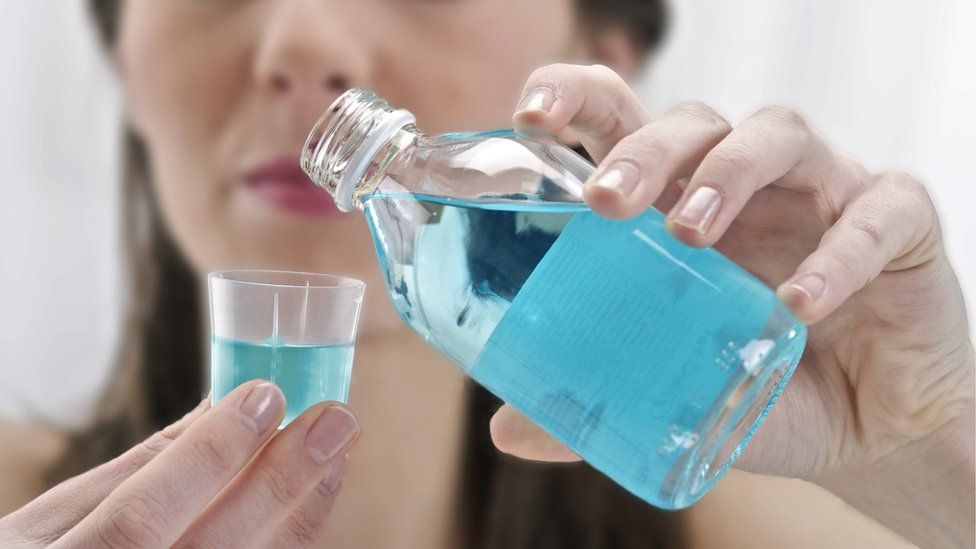
Mouthwash for better oral health
Mouthwashes are medicated solutions used for gargling and rinsing the mouth. The first reference of use of mouthwash as a formal practice is attributed to Chinese medicine in the year 2700 B.C. A variety of methods and substances like mixtures of betel leaves, camphor, and cardamom or other herbs, a mixture of salt, alum and vinegar, and anise, dill and myrrh in white wine have been used. Currently Chlorhexidine is the gold standard among mouthwashes. This article describes the rationale behind using mouthwash, uses, types of mouthwash and adverse effects.
Rationale behind use of mouthwash
Given the inadequacy of mechanical plaque control by the majority of people, mouthwash adds to oral hygiene regimen for the control and prevention of periodontal diseases.
Mechanical removal of dental plaque by regular tooth brushing and interdental cleaning remains the principal means of preventing the development of various periodontal diseases. Studies indicate that most people fail to maintain a level of mechanical plaque control sufficient to prevent disease. Thus, for those who are unable to brush their teeth themselves or other individuals who lack the dexterity, skill or motivation for mechanical plaque removal, mouthwashes may aid in controlling dental plaque and periodontal disease.
It is a method of delivering antimicrobial agents to mucosal sites throughout the mouth that harbor pathogenic bacteria capable of recolonizing supragingival (above gum line) and subgingival (between gums and tooth surface) tooth surfaces, thereby providing a complementary mechanism of plaque control.
Researches have compared the bacterial composition of supragingival and subgingival plaque with that of saliva and various mucosal surfaces and have shown that the oral mucosae—in particular the dorsum and lateral borders of the tongue and, to a lesser degree, the buccal mucosae—serve as reservoirs for bacteria which can be the source of pathogens that recolonize teeth after a dental prophylaxis or periodontal therapy.
Uses of mouthwash
Benefits of mouthwashes include improving the reduction of plaque biofilm as an adjunct to oral hygiene, killing bacteria in areas difficult to reach by normal oral hygiene, killing bacteria on non-tooth oral surfaces, reaching bacteria subgingivally by placement in an irrigator and supporting a positive effect on oral health by reducing bacteremia from oral micro-organisms.
They can be used as an adjunct to mechanical oral hygiene procedure in conditions like:
After subgingival scaling or root planing
In patients having inadequate oral hygiene
Post-scaling cervical hypersensitivity
They can be used to replace normal tooth brushing which is not possible in various conditions like:
After periodontal surgical procedures
After intermaxillary fixation (treatment post-trauma)
During acute oral or gingival infection
Types of mouthwash
Based on the use, mouthwashes are classified as Cosmetic and Therapeutic. Cosmetic mouthwash may temporarily control bad breath and leave behind a pleasant taste. They have no chemical or biological application beyond their temporary benefit. Therapeutic mouthwash, on other hand, has active ingredients intended to help control or reduce conditions like bad breath, gingivitis, plaque, and tooth decay.
Active ingredients used in therapeutic mouthwash and their functions:
Chlorhexidine – antimicrobial
Essential oils – antimicrobial
Cetylpyridinium chloride – Reduces bad breath
Fluoride – prevents tooth decay/ dental caries
Peroxide – used in tooth whitening mouthwashes
Chlorhexidine – The gold standard
It has broad spectrum antimicrobial activity. Chlorhexidine’s antiplaque effect is because of the dicationic nature of the chlorhexidine molecule. It caters to the property of persistence (substantivity) of antimicrobial effect at the tooth surface, through both bactericidal and bacteriostatic effects. 0.12% Chlorhexidine has proved to result in plaque reduction of 21-60.9% and 18-42.5% reduction in gingivitis. Although Chlorhexidine has proven to be the best among all, it has few peculiar side effects. Staining of teeth, altered taste sensation and rarely swelling of parotid glands. To overcome staining, newer formulations with Anti-discoloration system (ADS) are now in use.
According to American Dental Association – Using a mouthwash is not replacement or alternative for optimal brushing and flossing. Mouthwashes may offer additional benefit in terms of reducing the risk of bad breath, cavities, or gum disease; or for relief of dry mouth or pain from oral sores.
What is the best choice ?
One needs to meet the dentist and get evaluated to understand the oral health status. Based on the oral health status dentist will prescribe the choice of mouthwash that needs to be used. Ideally, Chlorhexidine is most prescribed due to its longer time of action and actions like substantial reduction in dental plaque formation and reduction of gingivitis. Apart from chlorhexidine, essential oil based mouthwashes are also prescribed. In view of COVID19 infection, Povidine- Iodine mouthwash/ gargle are the choice as they have shown to reduce the viral load and thus prevent onset of infection or spread of infection.









Hailey - 9 months ago