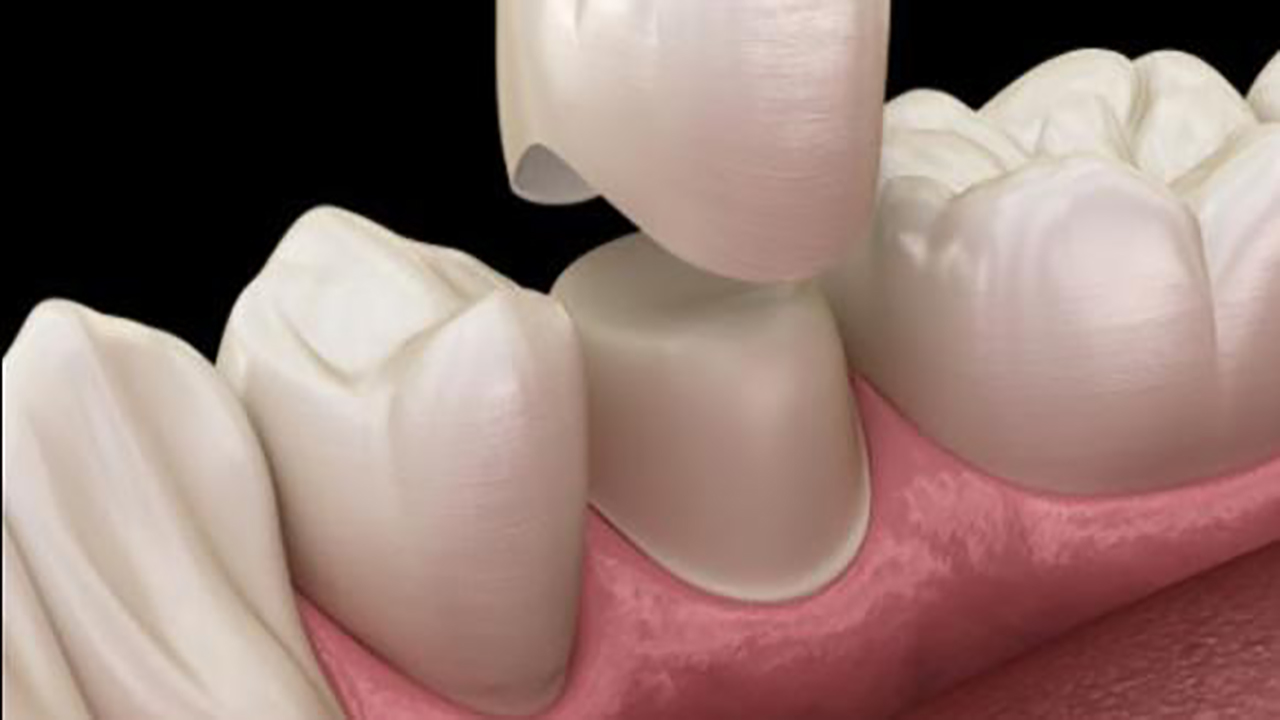
Endodontic treatment of a tooth can be called successful only after prosthodontic rehabilitation i.e. crown placement for the tooth. An endodontically treated tooth must be evaluated before definitive restorative procedures are initiated.
What are the factors to look for before definitive restoration of root canal treated teeth ?
Definitive restorative treatment should not be initiated if the root canal treated tooth exhibits any of the following:
- Poor root canal filling
- Active inflammation
- Pressure sensitivity
- Exudate
- Fistula (or parulis)
- Periodontal disease (moderate or severe periodontitis)
- Severe loss of sound tooth structure
If any of the above mentioned condition is present, either retreatment is the option or extract the tooth or wait and watch.
Endodontically treated teeth are associated with unique structural and functional challenges such as –
- High amount of moisture loss and the nature of dentin is different in a root canal treated teeth
- Alterations in strength caused by architectural changes in the morphology of the teeth
- Concepts of the biomechanical behavior of tooth structure under stress
- Biological width has to be maintained while giving restorations
- Protecting the remaining coronal tooth tissue by creating the ferrule
For an anterior root canal treated teeth –
- If minimal coronal damage with intact marginal ridge, intact cingulum, intact incisal ridge then complete coverage is not needed and can be conservatively treated with bonded resin composite
- Moderate coronal damage with one or two large proximal lesions, average-size tooth then full coverage crown is required
- If there is significant coronal damage and undermined marginal ridges, loss of incisal edge, coronal fracture or esthetically unacceptable then custom-made or prefabricated post and cores are required
For a posterior root canal treated teeth –
- When minimal coronal damage with low risk of fracture, minimal occlusal forces and intact buccal and lingual cusps then it calls for an conservative approach like bonded onlays
- If moderate coronal damage, minimum of one sound cusp or extreme root curvature then amalgam coronal radicular core or resin composite core followed by a full-coverage crown is indicated
- If significant coronal damage with little or no remaining coronal tooth structure, high risk of fracture and FPD or RPD abutment - Extremely tapered canals will require custom-made post and core followed by a full-coverage crown. Whereas canals with circular cross-sections requires prefabricated post with amalgam or resin composite core followed by a full-coverage crown
Ideally, the final restoration should be planned before the root canal treatment is initiated, although the restorative plan may be modified as the treatment progresses based on the clinical scenario.
Article by Dr. Siri P. B.

 Dentist Channel Online







- 3 years ago