What is Remineralization of teeth ?
The remineralization process is a repair mechanism to restore the minerals again, in ionic forms, to the hydroxyapatite (HAP) crystal lattice. It occurs under near-neutral physiological pH conditions whereby calcium and phosphate mineral ions are redeposited within the caries lesion from saliva and plaque fluid resulting in the formation of newer HAP crystals, which are larger and more resistant to acid dissolution.
Fluoride
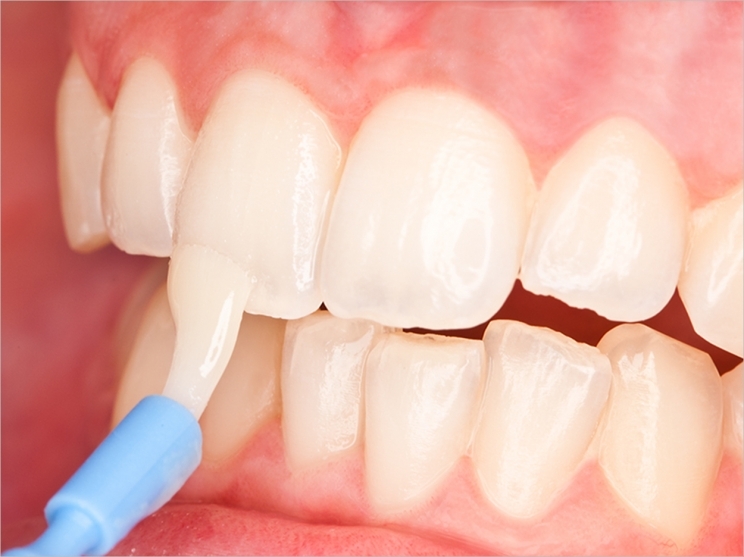
Use of fluoride for remineralization is a well established. Combination of fluoride topical treatment immediately followed by intense light exposure enhances fluoride uptake into enamel, causes the formation of fluorapatite even under neutral pH conditions, and lowers the critical pH at which enamel and dentin dissolution occurs. Fluorapatite crystals have a critical pH of 4.5, allowing fluorapatite to resist acid demineralization significantly better than hydroxyapatite, which has a critical pH of 5.5
- Fluoride acts on “enolase” enzyme and thus prevents the conversion of glucose to lactic acid
- It prevents entry of glucose into bacterial cell
- It prevents conversion of glucose into glycogen which acts as storehouse when glucose is not available
- It desorbs protein and bacteria and also lowers free surface energy
- Fluorapatite decreases the solubility and also improves crystallinity
Light-activated fluoride (LAF) can reduce susceptibility of both enamel and root surfaces to cariogenic challenges produced by various acids produced in the mouth. Use of this mechanism reduces the likelihood of caries and erosion. LAF can be applied to prevent caries from developing, as well as to reduce the progression rate of existing lesions on the enamel and root surfaces of teeth.
Multiple mechanisms for light-activated fluoride therapy
- Enhanced deposition of calcium fluoride
- Swelling and denaturation of proteins on the tooth surface
- Formation of micro spaces in tooth structure
- Greater affinity for calcium, phosphate, and fluoride ions
- Trapping of minerals in the subsurface
- Formation of tri-calcium phosphate
- Sealing of surface pores
- Conversion of hydroxyapatite to Fluorapatite
Some key proteins that stabilize calcium and phosphate
- Saliva
- Statherin
- Acidic proline-rich proteins
- Histatins
- Milk
- Alpha caseins
- Beta caseins
- Hard tissues
- Ameloblastin
- Enamelin
- Osteopontin
- Bone sialoprotein
- Dentin sialoprotein
- Beta Tricalcium Phosphate (TCP)
Other possible means for enhancing levels of calcium in plaque and saliva
Bioactive glass containing calcium sodium phosphosilicate
- The material has attracted some interest both as a desensitizing agent (by occluding dentin tubules) and as a potential remineralizing agent for enamel white spot lesions. No evidence is available yet
Amorphous calcium phosphate (ACP)
- When applied topically, ACP flows onto the tooth surface and penetrate into microscopic surface defects, altering the smoothness and luster of the enamel surface, and giving some cosmetic improvements in dimpled, abraded, or etched tooth enamel.
Dicalcium phosphate dehydrate
- Dicalcium phosphate dehydrate (DCPD) has been used in some fluoride dentifrices to attempt to enhance the remineralizing effects of the fluoride component.
Topical Casein Phosphopeptide Amorphous Calcium Phosphate (CPP-ACP) cream
In Prevention
- Caries prevention in high caries risk patients
- Caries prevention during fixed orthodontic treatment
In Treatment of enamel
- Reversal of carious white spot lesions
- Reversal of orthodontic decalcification
- Reversal of mild and moderate fluorosis
- Reversal of mild white developmental opacities
- Reversal of enamel opacity from excessive bleaching
Treatment of dentin and root surfaces
- Desensitization of cervical dentin
- Prevention of root surface caries in high risk patients
Article by Dr. Siri P.B.













Hailey - 8 months ago