
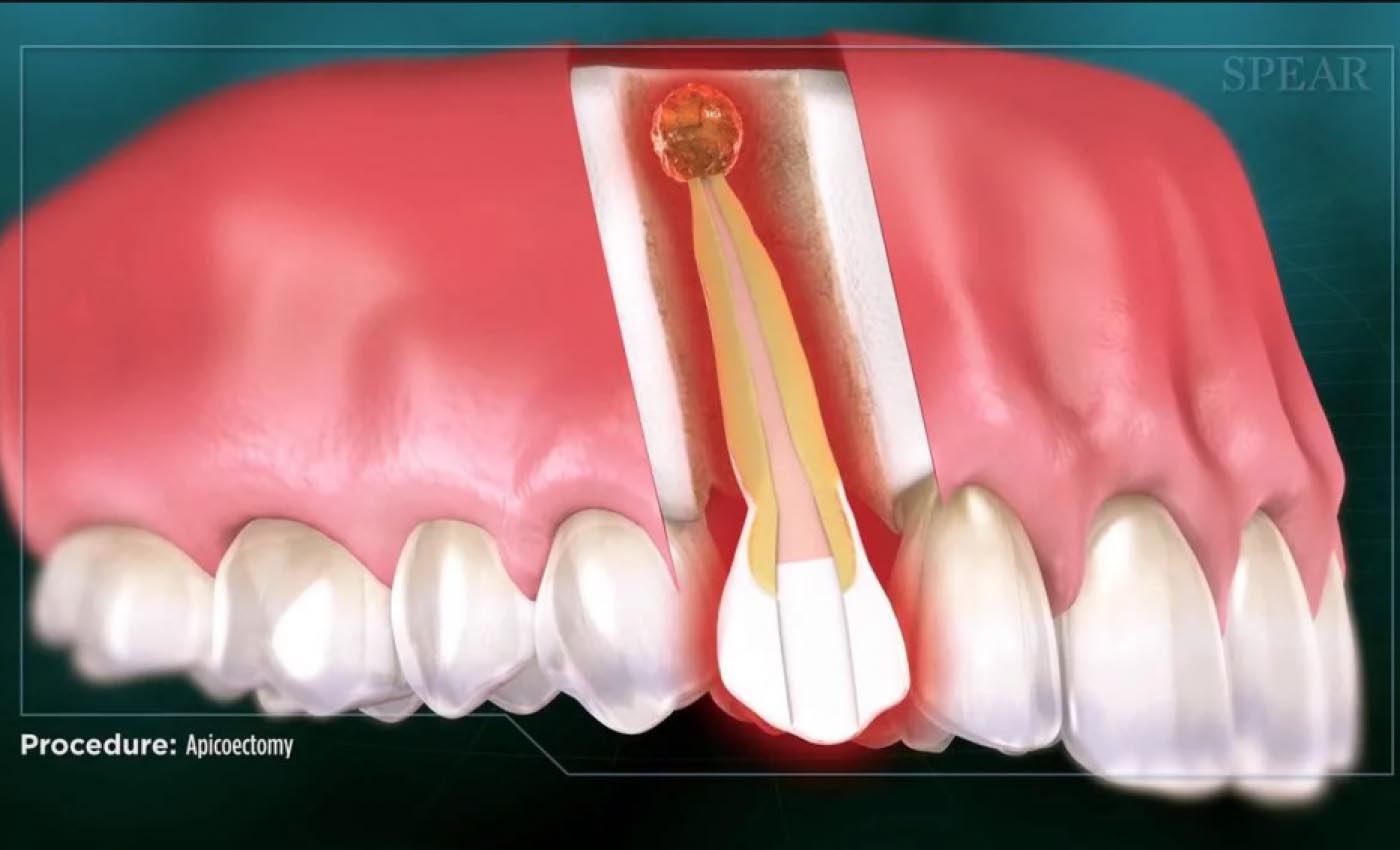
Saving the Risky Tooth with Apicoectomy
What is Apicoectomy?
Apicoectomy is a root end surgery whereby a tooth’s root tip is removed and a root end cavity is prepared and filled with a dental-grade material. An apicoectomy is a minor surgical procedure that’s done to save teeth at risk and prevent potential complications. Apicoectomy is also called as apical surgery, which is a reference to the “apex,” or end of a tooth-root.
Why would one need Apicoectomy?
One may needs an apicoectomy if even after having a root canal already performed, there’s residual inflammation or infection near the root tip that reaches into the jawbone. In cases where there’s one root crowding into the space of the root next to it, an apicoectomy may help prevent problems that could affect another teeth later on.
What is the procedure for Apicoectomy?
The procedure of Apicoectomy is as fallows:
At first, a local anesthetic is given to numb the area around the affected tooth is given.
Then your dentist makes a small incision through the gum and pushes the gum tissue aside in order to reach the root, creating a pocket.
Post the root tip being removed, the canal inside the tooth is cleaned and then sealed with a small filling to prevent future infection.
Your dentist will then take an X-ray to make sure that there are no spaces where a new infection could take hold.
The tissue will then be stitched so that the gum can heal and grow back in place. Your jawbone will also eventually heal around the filling at the end of the root.
The location of the tooth and the complexity of the root structure can affect the time needed to complete the surgery.
Recovery post-Apicoectomy
One tends to experience some minor discomfort and swelling once the anesthetic wears off. This gradually lessens over the next few days, though, and within a day or two, you should be able to resume normal activities.
For pain, anti-inflammatory medications such as ibuprofen should be sufficient. Stitches are usually removed within a week. You’ll need to be careful when brushing and flossing near the site of your surgery while the stitches are in place.
Final Note
It is very important to prevent serious complications involving the health of your mouth and jaw. Apicoectomies are recommended if a root canal procedure was unsuccessful and there’s an infection present around the root tip of a tooth. So, if your dentist recommends root tip surgery, give it serious consideration. An infection around one of your teeth could spread, causing serious dental health problems.

















Hailey - 8 months ago