
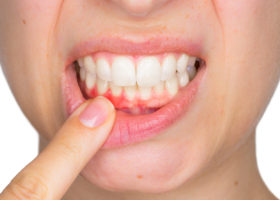
Why do your Gums Pain?
Gum Pain & Sensitivity might be due to an underlying dental infection. This sensitivity might also lead to teeth pain which makes it very uncomfortable to the patient. Read this article to know more about the relation of Teeth to Gum Sensitivity and what you must do in such scenarios.
Change of Mouthwash?
Do you like the taste of minty fresh breath? You can be setting yourself up for a sore mouth if you swig mouthwash during the day. This is because certain goods contain acids, which aggravate teeth that are already sensitive. The answer is simple: Rinsing can be done only once or twice a day. If you’re still sensitive, talk to your dentist about fluoride rinses that are neutral or that reduce exposure, as well as which ingredients to avoid. Ask your dentist for a good mouth wash so as to avoid any harm to you directly or indirectly.
Consumption of Acidic Foods
Can’t get enough of tomatoes, citrus, fruit juices, and other mouth-watering foods? Your teeth can do so. When you consume too many acidic foods and beverages, you risk eroding the outer layer of your teeth, known as enamel, and exposing the tender layer underneath, known as dentin. Don’t want to give up your beloved tarts? After eating, cut the acid with a piece of cheese or a glass of milk. Don’t forget a simple rinse with water to remove any hidden food particles which may lead to gum sensitivity due to its constant accumulation.
Toothpastes and Tooth Whiteners
We all want a brighter smile, but tooth whiteners and some kinds of toothpaste containing peroxide-based bleaching agents can irritate teeth. However, once you quit using the product, the feeling usually goes away. Do you want to know what the best choice is for you? Consult your dentist for any type teeth-whitening procedures.
Gums that are receding
Thousands of tiny tubes run through the roots of your teeth, carrying sensations (hot, cold, sweet) to the pulp, a nerve center. The seeds are usually hidden under the gum tissue. However, if you have periodontal disease, the layer will pull away from your teeth, revealing the exposed root. Receding gums need the assistance of a dentist, so make an appointment with yours.
Too Much Effort When Brushing Your Teeth
Gums will pull away from tooth roots if you brush too hard or don’t use a soft brush. This will break down your enamel and expose your dentin (yellow). The tiny tubes (blue) that allow hot, cold, and sweet foods to affect tooth nerves are called dentin holes. Oh, no!
Dental Work Done Recently
It doesn’t seem fair, but keeping your pearly whites in good condition with daily dental appointments can often work against you. Tooth sensitivity may be caused by teeth cleanings, new crowns, tooth restorations, and root planing. Speak to your dentist if you’re concerned about this during a procedure or if it persists afterward.
Teeth Cracked
Chipped and damaged teeth may be caused by chewing ice, biting into hard candies, or having big fillings. When you chew on a broken tooth, the nerve-rich pulp deep inside may become irritated. A crack can also become infected with bacteria, resulting in inflammation and increased pain.
Clenching or Grinding the Molars
The most vital substance in your body is tooth enamel, but it can’t stand up to the force of clenching or grinding. Both of these seemingly innocuous habits will wear away enamel over time, putting nerves at risk. Mouthguards, lifestyle improvements, and dietary modifications can also help to reduce wear and tear.
Decay of the teeth
The root of your tooth is exposed to various irritants as it develops decay, such as hot, cold, candy, and even air. Practice good oral hygiene, eat well, and visit your dentist regularly to combat decay and keep your teeth in top shape.
FINAL NOTE:
Always speak to your dentist about what’s causing your teeth to be sensitive. You may need to make a few more adjustments to your oral hygiene routine to improve your pearly whites. Never forget to visit your dentist for dental check-up once every six months. Gum pain and gum sensitivity are underlying causes to serious Periodontal problems which need to be addressed as early as possible.







Hailey - 8 months ago