
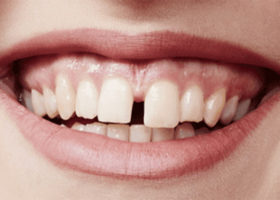
6 possible causes and 3 solutions to Tooth Gaps
Have you ever been in a situation where you were not able to smile confidently? If your answer is a yes, it’s time to close the distance. No, you don’t have to get braces, but before we look at all of your choices, let’s learn more about the space between your teeth.
Diastema, or a gap between the teeth, may occur anywhere in the mouth. The spacing between the upper front teeth is the most evident. Diastema may affect both children and adults, but gaps in children’s teeth can close once their permanent teeth emerge.
It is not harmful, and it does not necessitate treatment for medical purposes. Many who are aware of it for cosmetic purposes, on the other hand, may close or narrow the distance.
Teeth Gaps: What Causes Them?
Diastema is caused by a combination of factors rather than a single cause. The following are six typical causes of tooth gaps:
Diastema can run in families
If anyone in your family has a gap between their teeth, you’re likely to have one as well.
When your teeth are too short in comparison to the size of your jawbone, you get spacing. Jawbone and tooth proportions are now genetically determined, which is why it makes diastema a genetic disorder.
It’s not uncommon to see diastemas in families.
Teeth that are missing
Some people may have teeth that are missing or are smaller than others. Diastasis may occur if this is the case.
This most often happens in the teeth on either side of the upper front teeth. If the upper lateral incisors are missing or have a small size, a gap between the two front teeth may form.
Labial Frenum Is Too Large
Isn’t it confusing? The labial frenum is a piece of tissue that runs from the inside of the upper lip to the gum behind the upper front teeth.
A distance between the two front teeth will develop if this tissue is more significant than average.
Periodontal Disease
Some teeth can migrate if the gum disease is advanced. This is because the inflammation caused by gum disease will damage the bone that protects the teeth.
The teeth can become loose as a result, resulting in a gap.
Bad Oral Hygiene
Lip licking, thumb sucking, and tongue thrusting are all childhood behaviors that can pressure the front teeth.
This causes the teeth to move forward, resulting in a gap between the front teeth.
The Incorrect Swallowing Reflex
The tongue presses against the roof of the mouth as you swallow. This is the natural reflex of swallowing.
When swallowing, however, some people press their tongue against their front teeth. The front teeth would shift forward due to the repeated pressure, creating a gap between them.
Treatment for Tooth Gaps:
The following are some of the most popular treatment choices for teeth gaps:
Braces:
Braces are a popular orthodontic solution for closing gaps between teeth. They apply pressure to the teeth and shift them into the proper position over time. This contributes to the narrowing of the chasm. When it comes to eating, though, these are unpleasant and restricting. They are very noticeable and visible, which can cause people to become aware of them.
Teeth gap bands:
These are thin, elastic rubber bands identical to the ligatures that orthodontists use during orthodontic care. To use the band, wrap it around the teeth that you want to close the distance between. The pressure on the teeth is said to help close the gap by bringing the teeth closer together. Teeth gap bands, despite their simplicity and effectiveness, may have serious consequences.
Clear Aligners:
If you want to close a distance between your teeth without using braces, clear aligners are your best option. These are custom-made transparent trays that you can easily remove and fit in your mouth. The clear aligners apply gentle pressure to your teeth, causing them to move into their proper positions. The chasm will finally be filled. One of the most significant advantages of direct aligners is that there are no food limits. You can eat anything you want; simply take them off, eat, brush, and replace them.
Clear Aligners vs. Teeth Gap Bands
Teeth gaps appear to be a convenient option; however, they can result in permanent tooth damage. It could contribute to the need for other orthodontic care in the future. To put it bluntly, this is not the type of teeth gap treatment you want.
Clear aligners, on the other hand, are a safe and comfortable choice. They have effective results while causing no harm or damage to your teeth.
FINAL NOTE:
Tooth gaps can be easily closed through various dental procedures. If your tooth gaps bother you, you are advised to visit an Orthodontist, who will suggest the best treatment for closing of tooth gaps.







Hailey - 9 months ago