
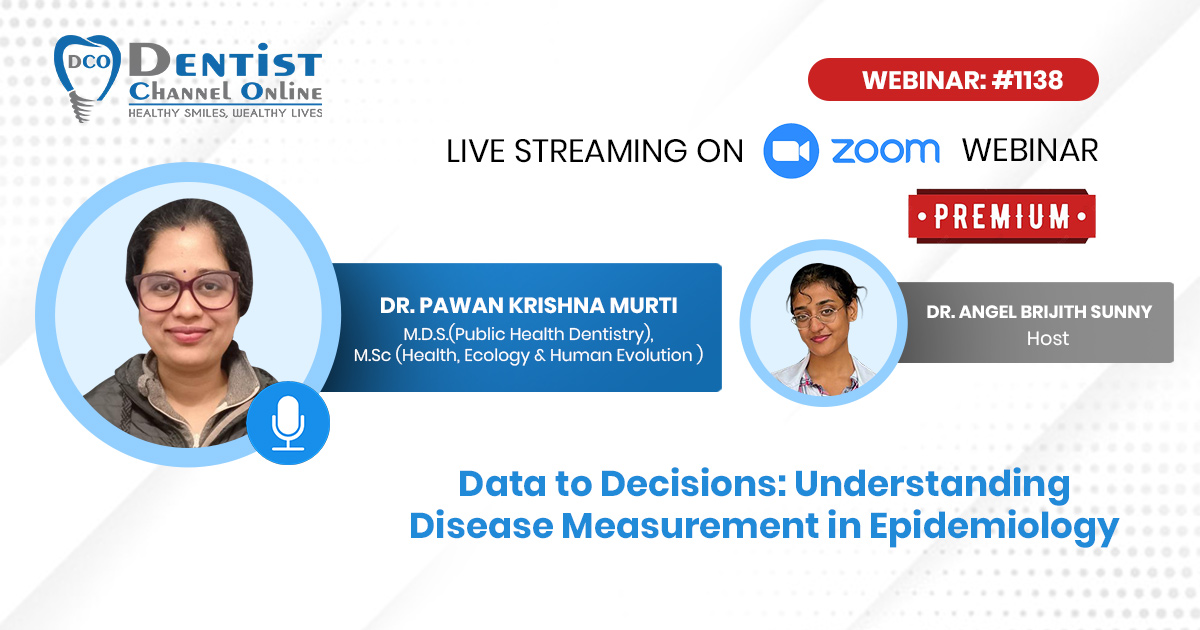
Certificate of participation with 1 CME is available
Epidemiology provides the scientific framework for understanding the distribution and determinants of health and disease in populations. This webinar offers a comprehensive introduction to the foundational concepts necessary for measuring and interpreting disease occurrence in public health research. Participants will begin with a clear definition of epidemiology and an overview of the types of variables commonly used in epidemiologic studies, including exposures, outcomes, and potential confounders.
The webinar will then introduce essential principles of hypothesis testing, including the interpretation of p-values and confidence intervals, enabling participants to critically assess statistical evidence in scientific literature. Core measures of disease frequency like incidence, prevalence, and mortality will be explained in detail, followed by a discussion of measures of association including relative risk, odds ratio, and attributable risk.
Special emphasis will be placed on understanding cause–effect relationships in epidemiology and evaluating the potential impact of exposures on disease burden through measures such as population attributable risk. The session will conclude by highlighting how accurate measurement of disease informs surveillance systems, guides prevention strategies, and supports evidence-based public health decision-making.
Highlights
This webinar is designed to strengthen participants’ analytical skills and enhance their ability to interpret epidemiological data for research, clinical practice, and public health action.
This webinar provides a structured and comprehensive overview of the fundamental concepts in epidemiology, beginning with a clear understanding of its definition and scope in public health research. It highlights the classification and role of different types of variables used in epidemiologic studies, followed by a simplified yet practical explanation of hypothesis testing, p-values, and confidence intervals. Participants will gain clarity on how disease frequency is measured using key indicators such as incidence, prevalence, and mortality rates, and how these measures help establish cause–effect relationships. The session further emphasizes the interpretation of important measures of association, including relative risk and odds ratio, as well as measures of potential impact like population attributable risk. Through practical examples, the webinar underscores how accurate measurement of disease guides evidence-based decision-making, surveillance, prevention strategies, and overall public health action.
Date: 18/04/2026 |08:00 PM IST













Mona - 6 months ago