
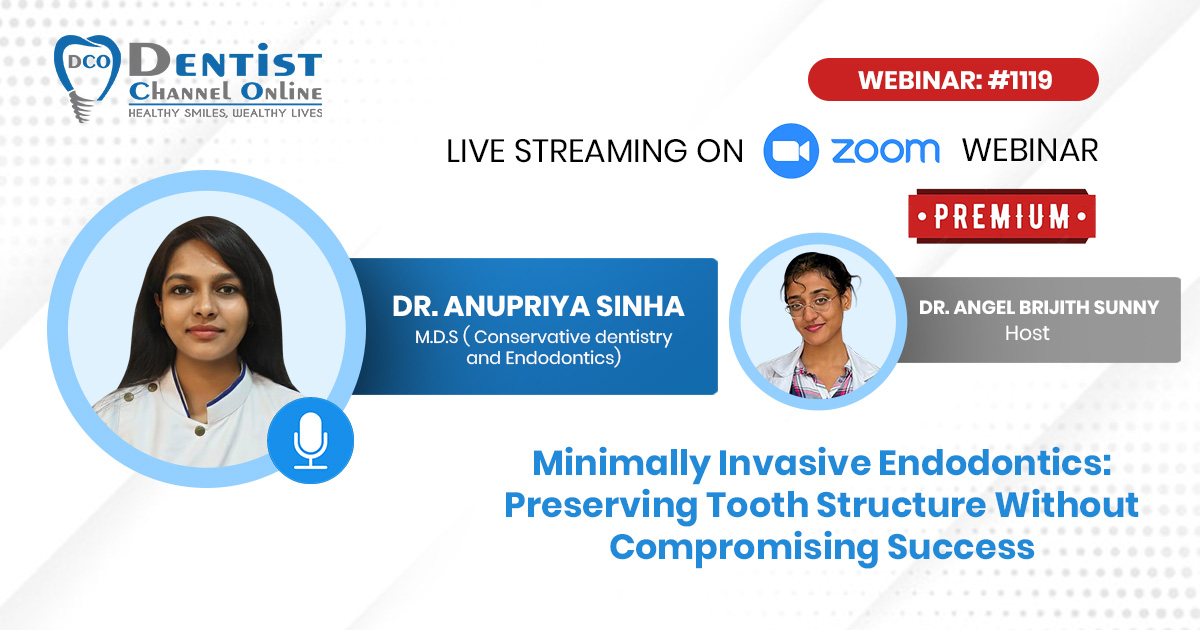
Certificate of participation with 1 CME is available
Long-term survival of Endodontically treated teeth depends not only on effective canal disinfection but also on preservation of sound tooth structure. Increasing evidence suggests that many failures occur due to structural weakening rather than persistent infection, prompting a shift toward Minimally Invasive Endodontics (MIE). This presentation discusses the biological and Mechanical Rationale behind MIE, with emphasis on preservation of Pericervical Dentin while maintaining adequate cleaning, shaping, and disinfection.
The principles of MIE will be explored across access cavity design, canal instrumentation, irrigation strategies, obturation, and the endodontic–restorative interface. The role of magnification, cone-beam computed tomography, and contemporary irrigation techniques in facilitating conservative yet predictable treatment will be highlighted. Current evidence will be critically reviewed to distinguish clinically effective conservative approaches from excessively contracted access designs that may compromise treatment outcomes. Through clinical cases and radiographic examples, this session emphasizes that minimally invasive endodontics is a philosophy guided by biology and case selection, aimed at improving long-term tooth survival without compromising success.
Endodontic success is no longer measured by radiographs alone, but by how long the tooth survives.
Highlights
Date: 06/02/2026 | 07:00 PM IST






Steven - 8 months ago