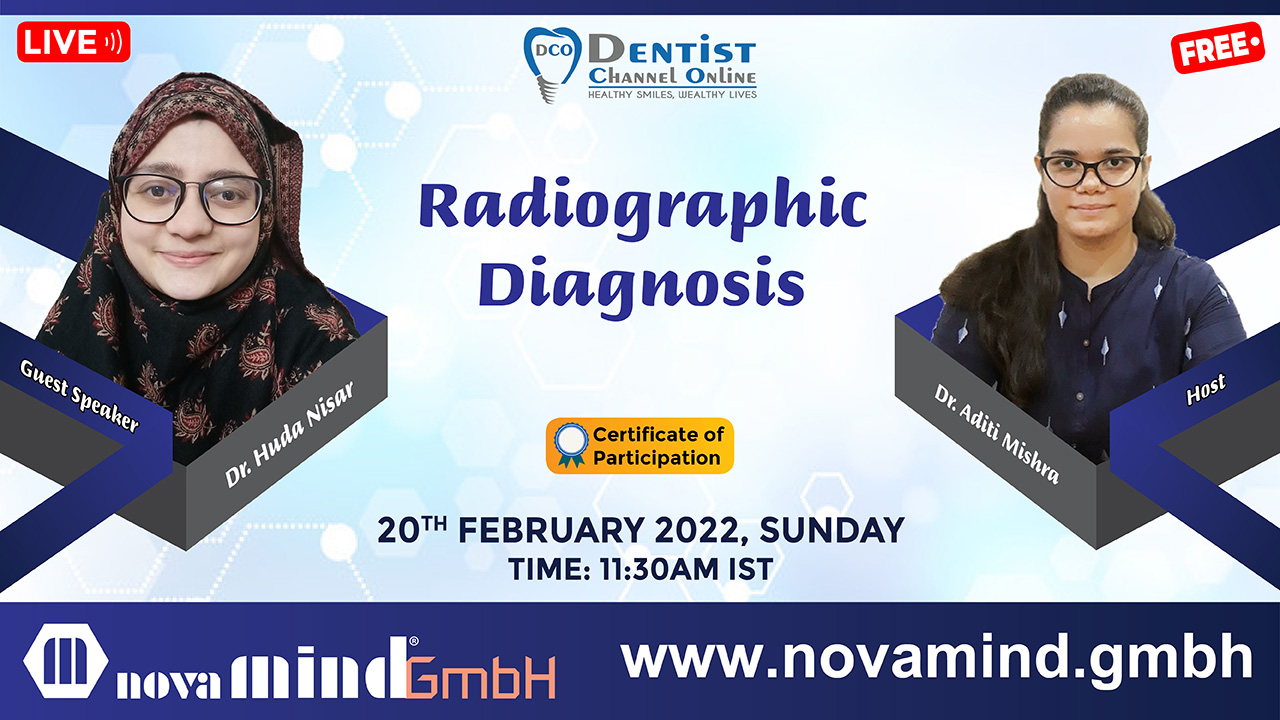
Radiographic Diagnosis

OBJECTIVE :  
Being able to detect dental caries on radiographs is an essential skill needed for providing comprehensive dental treatment. Certain types of dental caries are difficult to visualize intraorally, and therefore, the diagnosis need to be made based solely on the radiographs. This module will introduce students to a larger number of radiographic examples of caries than typically covered in lecture. 

Dental radiographs are critical for the complete assessment and treatment of dental diseases. Dental radiography is commonly used to evaluate congenital dental defects, periodontal disease, orthodontic manipulations, oral tumors, endodontic treatments, oral trauma, and any situation where an abnormality is suspected. Although standard radiographic equipment and film can be used to produce dental radiographs, dental X-ray equipment and film provide superior quality images and greater convenience of animal patient positioning. An understanding of normal dental radiographic anatomy is important when interpreting dental radiographs. Stage III periodontitis is the earliest stage of periodontal disease at which radiographic abnormalities become apparent. Bone loss associated with periodontal disease can be classified as either horizontal or vertical. Periapical radiolucencies can represent granulomas, cysts, or abscesses, whereas periapical radiodensities may represent sclerotic bone or condensing osteitis. Lytic lesions of the bone of the jaw often represent oral neoplasms. Neoplasms also can displace or disrupt teeth in the dental arch. Resorptive lesions can be external or internal and appear as radiolucent areas involving the external surface of the root or the pulp cavity, respectively.  
 

WHAT WILL YOU LEARN IN THIS SESSION ?  

  1. Introduction
  2. Basics of Radiology
  3. Tooth associated pathology
  4. Bone associated pathology
  5. Difference between commonly misinterpreted lesions
  6. Conclusion
  7. Live Q & A  

DATE : SUNDAY, 20th FEBRUARY, 2022 

TIME : 11.30 AM IST  


Watch Recorded Video :

Speaker(s)

Categories:
Tags :
Comments :
There are no comments yet.
Authentication required

You must log in to post a comment.

Log in
Exclusive Webinar
  Start Date

20 February, 2022 11:30 am

  End Date

20 February, 2022 12:30 pm

  Location

India

  Platform

Zoom

Register now Register now

Advertisement

Related Post:

  • 16 March,2027
International Dental Show (IDS) Cologne 2027

The world’s leading dental trade fair in Cologne showcasing the latest dental technologies, equipment, and innovations.

  • 20 February,2027
FAMDENT Show Hyderabad 2027| International Exhibition and Conference

FAMDENT Show Hyderabad brings together dental professionals, leading brands and industry experts for exhibitions, scientific sessions and workshops.

  • 6 February,2027
Expodent Kolkata 2027 | ADITI

Discover the latest dental products, technologies and innovations at a leading dental exhibition in Kolkata.

  • 24 January,2027
CAD CAM Dentures

CAD-CAM Dentures: Revolutionising Complete Denture Prosthodontics

  • 19 January,2027
AEEDC Dubai 2027 | International Dental Conference & Arab Dental Exhibition

World’s largest dental conference & exhibition bringing global dental innovation to Dubai in January 2027.

  • 12 January,2027
Esthetic Prowess: The Art of Esthetic Indirect Veneers

Join Dr. Ritul Agarwal for a two-day indirect veneers workshop with hands-on training and 16 German-accredited CME points in Mumbai.

  • 8 January,2027
Expodent International India 2027, New Delhi

India’s leading dental trade exhibition connecting dental professionals with the latest innovations, technologies, and industry leaders.

  • 31 December,2026
Shape Matters : How Dental Implant Macrodesign influences clinical outcomes

Explore how dental implant microdesign influences stability, osseointegration and clinical outcomes.

  • 22 December,2026
The Digital Revolution in Dentistry: Transforming Oral Health at Population Level

Discover how digital technologies are reshaping oral healthcare and improving population health outcomes.