Certificate of participation with 1 CME is available
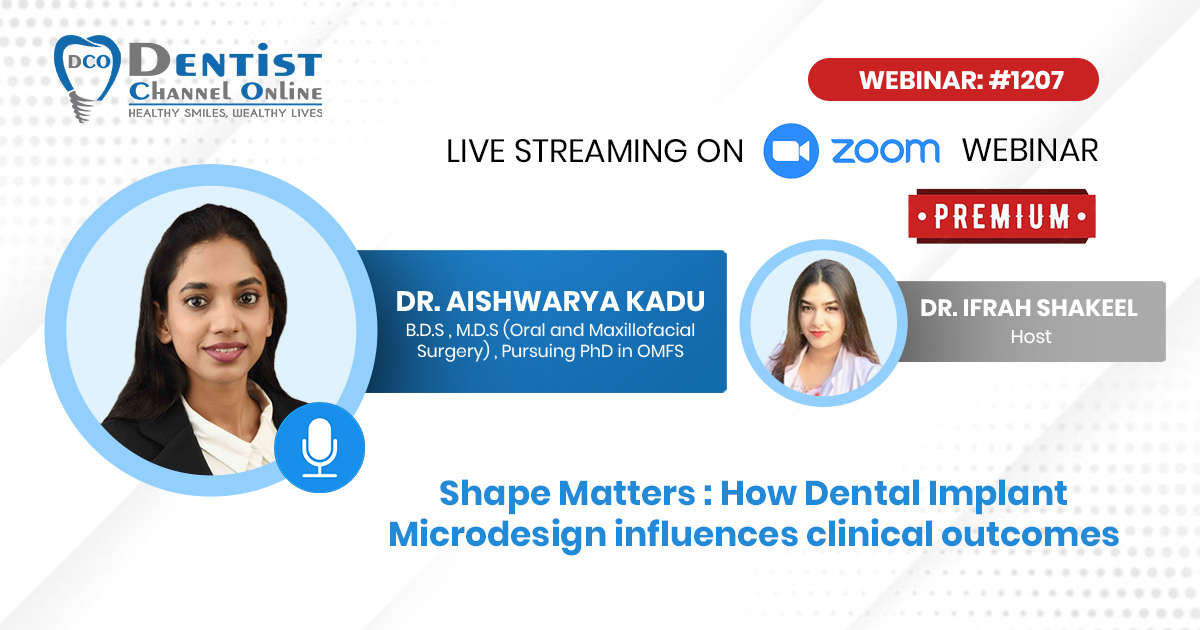
The success of dental implant therapy extends beyond material composition and surface characteristics. Implant macrodesign plays a critical role in determining primary stability, biomechanical load distribution and the subsequent biological response of peri-implant bone. Variations in implant body geometry, thread configuration, taper, pitch, depth, and apical design can influence the interaction between the implant and surrounding bone, ultimately affecting clinical performance.
This webinar explores the biomechanical and biological principles underlying contemporary dental implant macrodesign, with particular emphasis on how different geometric configurations influence primary stability and osseointegration. The role of cylindrical versus tapered body designs, thread profiles, variable thread geometry, and coronal and apical configurations will be discussed in relation to bone density, osteotomy preparation and clinical loading conditions.
Furthermore, the influence of implant macrodesign on stress distribution, marginal bone remodelling and implant stability in challenging clinical situations, including immediate implant placement, low-density bone and compromised alveolar ridges, will be explored. Relevant scientific evidence and clinical perspectives will be integrated to understand the advantages, limitations and indications of different implant configurations.
By connecting implant engineering with biological principles and clinical decision-making, this presentation aims to provide clinicians with a deeper understanding of how implant shape influences treatment predictability and long-term outcomes.
The webinar will highlight the significance of dental implant macrodesign in influencing clinical success, focusing on the relationship between implant body geometry, thread configuration, taper, pitch, depth and apical design. It will explore how variations in implant shape affect primary stability, stress distribution, bone-to-implant contact and osseointegration. Special emphasis will be placed on the clinical relevance of different implant designs in varying bone densities, immediate implant placement, compromised alveolar ridges and marginal bone preservation. By integrating biomechanical principles, biological responses and current scientific evidence, the webinar aims to provide clinicians with practical insights into selecting appropriate implant designs for predictable and long-term clinical outcomes.
Date: 25/12/2026 | 08:30 PM IST