
• Dentist Channel Online Dentist Channel Online
  • 19 June, 2020

Implant Failure - What are the factors behind ?

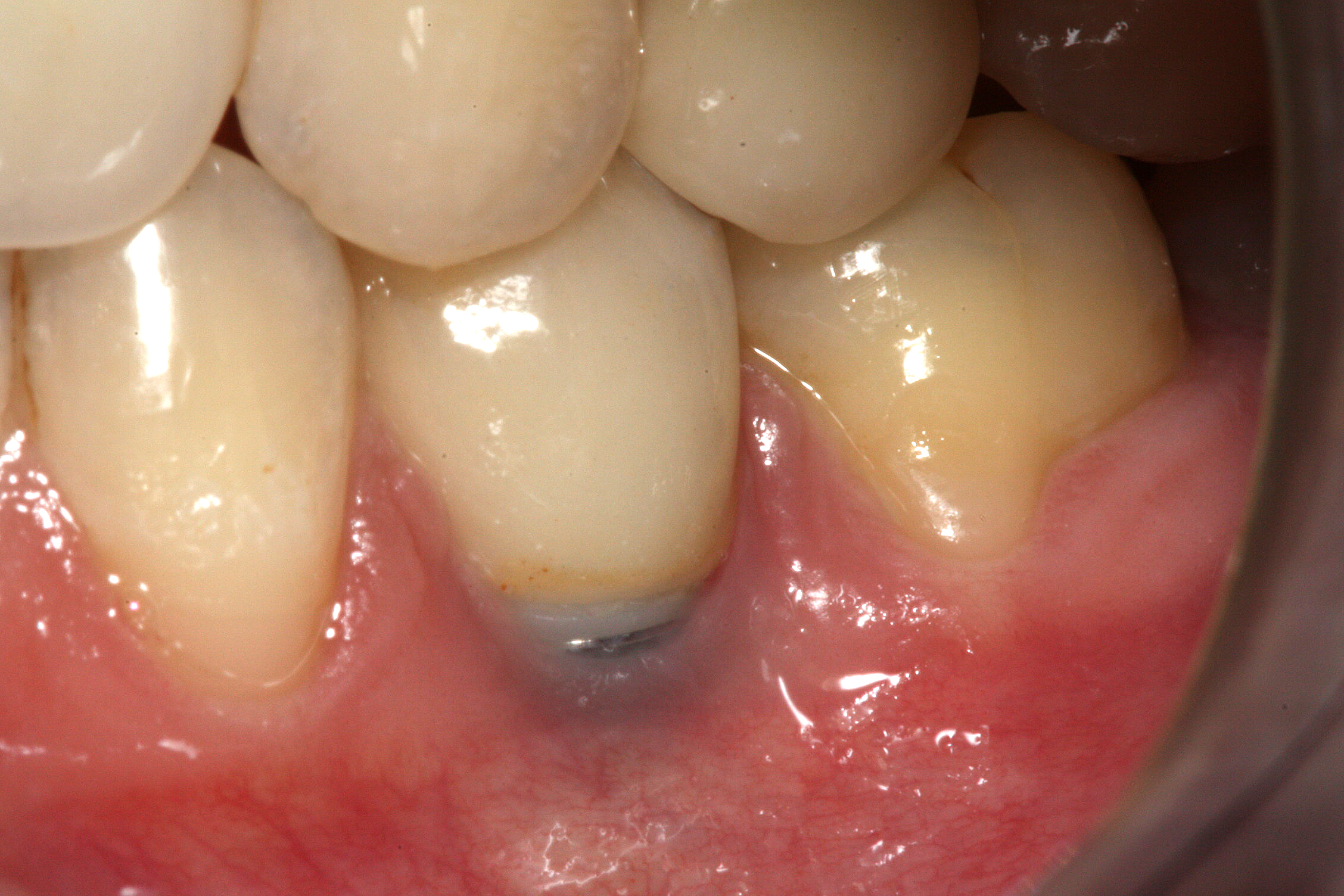
The possible occurrence of implant failure is a major issue for dental implantologists and knowledge to prevent and manage such scenarios is clinically essential. Implant failure can be diagnosed based on the clinical signs of infection such as hyperplastic soft tissues, suppuration, colour changes of the marginal peri-implant tissues, mobility of implant and gradual bone loss that can be seen in radiographs.

Criteria for Implant Success 

  • The individual implant is immobile when tested clinically 
  • No radiographic evidence of peri-implant radiolucency 
  • Bone loss not>0.2mm annually 
  • Gingival inflammation amenable to treatment 
  • Absence of symptoms of infection and pain 
  • Absence of damage to adjacent teeth 
  • Absence of parasthesia, anesthesia or violation of the mandibular canal or maxillary sinus 

Warning Signs of Implant Failure 

  • Fracture 
  • Loss of osseointegration 
  • Gingival enlargement  
  • Pain 
  • Infection and soft tissue sloughing 
  • Mobility of implant body 
  • Purulent exudates  
  • Peri implant gingival recession 

Categories of Implant Failure 

  • Biological failure 
  • Mechanical failure 
  • Iatrogenic failure 
  • Adaption failure 

Factors Influencing Failure

Patient  Factors  

  • Dentist must consider patient dependent criteria such as bone quality and quantity, oral and general health , patients oral habits.

Systemic  Factors 

  • Diabetes 
  • Osteoporosis- postmenopausal women 
  • Osteopenic patients

Bone Quality 

  • Type 1: Homogenous and compact bone 
  • Type 2: Dense trabecular bone surrounded by thick layer of  compact  bone 
  • Type 3: Thin layer of cortical bone surrounding a core of dense trabecular bone 
  • Type 4: Has a core of low-density trabecular bone encased in thin cortical bone 

Poor bone quality leads to loss of osseointegration and implant failure.

  • Type 1and 2 - favorable 
  • Type 4 - increases the risk of  failure 

Oral  Hygiene  Status 

  • Poor  oral hygiene – formation of oral biofilm 
  • Dental implants have no periodontal ligament between their surface and alveolar bone – easy microbial plaque accumulation on the rough implant surface – elicit inflammatory process 

              If inflammatory process is not controlled around the implant – bone loss and failure 

Oral  Lesions  And  Oral Habits 

  • Cysts, Mucosal lesions – contraindication 
  • Patients with autoimmune diseases and those receiving immunosuppressive drugs - poor prognosis if the implant is placed 
  • Bruxism
  • Smoking 
  • Periodontitis 

Implant  Design 

  • Implant length, diameter, surface and core characteristics influence the success or failure of osseous implant 
  • Range of the length of dental implants - 7-20mm 
  • Longer implant - high success rates 
  • Implant diameter contributes to higher bone-to-implant contact

Implant  Spacing/Number 

  • Spacing  is  important  between  implant and natural tooth 
  • Minimum separation -  3mm between natural tooth and implant is needed 
  • 4-7mm - prevent bone necrosis 

Take Home Message

Although success rate of dental implants are high, they do fail. A lack of primary stability, surgical trauma, and infection seem to be the most important causes of early implant failure. Proper case selection, diagnosis, treatment planning, good surgical practices and regular maintenance by patients are crucial for successful outcomes.


 Article by Dr. Siri P.B. 

Categories:
Tags :
Comments :
Hailey Avatar
Hailey - 1 year ago
My name is Hailey Garcia and I am from New Jersey. My herpes virus turned to war after 2 years of living with it. I have tried different medical procedures to cure my herpes but to no avail. Most people think herpes is only a minor skin irritation of which herpes has long term effects on health and passes through the bloodstream and can be easily contracted through sexual intercourse. I knew I had herpes from the first day I started feeling itchy in my pubic area and the pain was very unbearable. I couldn't stand it anymore. After 2 years of trying other means to get rid of it, I had to contact Doctor Odunga to help me with a permanent cure. I saw his email and whats-app number from a testimony I read online from a lady who was also helped by him in curing infertility problems, I had faith and contacted him. He assured me of his work and I ordered his herbal medicine. Within 5 days, I didn't feel any pain anymore and within 2 weeks, my skin was all cleared and smooth. I am very grateful to you sir and I write this testimony as others have done to bring those having faith to you sir. If you have herpes or other similar disease and you want it cured, kindly contact Doctor Odunga, Whats-App (wa.me/+2348167159012) OR Email [email protected]

Authentication required

You must log in to post a comment.

Log in

Upcoming webinars:

  • 20 May,2026
Skill Up to Step Up: Own your Seat at the Table

A career-focused dental webinar empowering clinicians to build confidence, leadership mindset, and claim their professional space in modern dentistry.

  • 22 May,2026
A Guide to healthy teeth

A practical webinar focused on maintaining optimal oral health through preventive care, hygiene practices, and everyday dental awareness.

  • 24 May,2026
Smart Materials

A Dental Webinar on Smart Saterials that enhance Performance and Patient outcomes.

  • 29 May,2026
Introduction to Airway Dentistry

Explore the fundamentals of airway-focused dentistry and its role in breathing, sleep, and overall oral health.

  • 31 May,2026
Hidden Anatomy: Cracking the Code of Complex Root Canals

Master the identification and management of hidden anatomical variations in root canals to improve endodontic success and avoid missed canals.

  • 3 June,2026
Not Just Teeth: Understanding Your Mind and Your Patient’s Mind in Dentistry

Explore the psychology behind dental practice to better understand your own mindset and improve patient communication, trust, and treatment acceptance.

  • 6 June,2026
Orofacial Pain & TMD: From Ambiguity to Accuracy

Advanced insights into diagnosing and managing temporomandibular disorders and orofacial pain with a focus on clinical accuracy and evidence-based care.

  • 12 June,2026
Taming the TMJ

Master TMJ management with expert insights on diagnosis, treatment planning, and advanced clinical approaches for temporomandibular disorders.

  • 15 June,2026
FMR: Restoring Function and Aesthetics

Advanced FMR session on Restoring function and aesthetics in complex Dental Cases.