What is Trauma from Occlusion ?
Also known in short as TFO occurs when occlusal forces exceed the adaptive capacity of tissues, tissue injury results. The resultant injury is termed trauma from occlusion.
Case definitions - updates from recent literature
- Excessive occlusal force is defined as occlusal force that exceeds the reparative capacity of the periodontal attachment apparatus, which results in occlusal trauma and/or causes excessive tooth wear (loss).
- Occlusal trauma is a term used to describe injury resulting in tissue changes within the attachment apparatus, including periodontal ligament, supporting alveolar bone and cementum, as a result of occlusal force(s).
- Primary occlusal trauma is injury resulting in tissue changes from excessive occlusal forces applied to a tooth or teeth with normal periodontal support.
- Secondary occlusal trauma is injury resulting in tissue changes from normal or excessive occlusal forces applied to a tooth or teeth with reduced periodontal support.
Etiology/ Causes of Trauma from Occlusion
- Magnitude of occlusal forces
- Direction of force application
- Duration of force application
- Frequency of force application
Predisposing factors
Intrinsic
- Orientation of the long axis of the tooth in relation to the occlusal forces
- Morphological characteristics of the roots
- Morphology of the alveolar process
Extrinsic
- Local factors like plaque
- Long span FPDs
- Injudicious bone destruction
- Parafunctional habits
- Others: food impaction, overhanging restorations, ill fitting FPDs, poorly contoured restoration
Classification of Trauma from Occlusion
According to onset and duration
Acute trauma from occlusion -
- Results from an abrupt occlusal impact, such as that produced by biting on a hard object.
- Restorations or prosthetic appliances that interfere with or alter the direction of occlusal forces on the teeth.
- Acute trauma results in tooth pain, sensitivity to percussion, and increased tooth mobility
Chronic trauma from occlusion -
- More common and has more clinical significance
- It most often develops from :
- - gradual changes in occlusion produced by tooth wear
- - drifting movement
- - extrusion of teeth
- - combined with parafunctional habits such as bruxism and clenching
According to cause
Primary trauma from occlusion – When trauma from occlusion is the result of alterations in occlusal forces, it is called “primary trauma from occlusion.”
Examples:
- Insertion of a high filling
- Insertion of a prosthetic replacement that creates excessive forces on abutment and antagonistic teeth
Secondary trauma from occlusion – Occurs when the adaptive capacity of the tissues to withstand occlusal forces is impaired by bone loss resulting from marginal inflammation. This reduces the periodontal attachment area and alters the leverage on the remaining tissues.
Clinical Features of Trauma from Occlusion
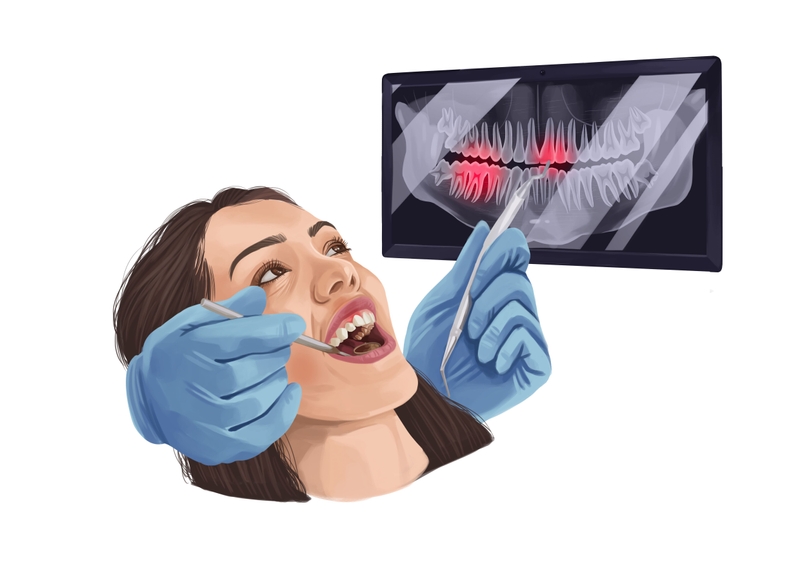
- Excessive tooth pain.
- Tenderness on percussion.
- Hypermobility of the teeth.
- Infrabony pockets.
- Furcation involvement.
- Attrition
Radiographic features
- Increased width of periodontal ligament space.
- Thickening of the lamina dura along the lateral aspect of the root in the apical region and in the bifurcation.
- Root resorption
Management of Trauma from Occlusion
Occlusal adjustment - Reshaping of the occlusal/incisal surfaces of the teeth/tooth or coronoplasty involves selective grinding of teeth for harmonious relationship
Management of parafunctional habits -
- Bruxism can cause significant injury to the periodontium
- Night guards are used to treat night grinding of the teeth
- It also helps in relaxation of masticatory muscles
Splinting of the teeth -
- Mechanism of joining adjacent teeth
- Reduces mobility and converts mobile teeth to a single unit which is expected to withstand occlusal forces better than individual tooth
Extraction of teeth -
- Rarely, extraction is indicated.
- Teeth with poor prognosis are indicated for extraction.
Orthodontic tooth movement -
- Tooth movement shall eliminate the abnormal occlusal forces.
- A periodontally compromised tooth is not indicated for orthodontic movement
Current update on the concept
Occlusal trauma does not initiate periodontitis, and there is weak evidence that it alters the progression of the disease. There is no credible evidence to support the existence of abfraction or implicate it as a cause of gingival recession. Reduction of tooth mobility may enhance the effect of periodontal therapy.
Take Home Message
- Abnormal occlusal forces and their relation with periodontal disease is widely studied. However, no conclusive evidence obtained so far.
- Trauma from occlusion doesn’t cause gingival inflammation but can modify the spread of inflammation into underlying connective tissue.
- Plaque control and proper oral hygiene is primary with regard to control of inflammation.
- Elimination of abnormal occlusal forces also plays vital role.
References: Fan, J, Caton, JG. Occlusal trauma and excessive occlusal forces: Narrative review, case definitions, and diagnostic considerations. J Periodontol. 2018; 89( Suppl 1): S214– S222.
Article by Dr. Siri P.B.











Hailey - 1 year ago