
• Dentist Channel Online Dentist Channel Online
  • 21 March, 2022

Development of Face and Pharyngeal Arches


The mesenchyme for the formation of the head region is derived from mesoderm, neural crest and thickened regions of ectoderm known as ectodermal placodes. The formation of face region is from the contribution of five mesenchymal prominances namely – Frontonasal, two mandibular processes and 2 maxillary processes. 

Frontonasal process forms the forehead, the nasal septum, philtrum of upper lip and premaxilla bearing upper four incisor teeth. Maxillary process forms whole of upper lip except the philtrum and most of the hard and soft palate except the part formed by the premaxilla. Mandibular process forms the whole lower lip. 

Derivatives of pharyngeal arches 

Arch number 1 – Mandibular arch

  • Quadrate Meckel's cartilage. 
  • Carilagenous derivatives - Incus Malleus Anterior ligament of malleus Spine of sphenoid Sphenomandibular ligament Genial tubercle of mandible. 
  • Muscles belonging to the arch - Tensor tympani Muscles of mastication Mylohyoid Anterior belly digastric Tensor veli palatine. 
  • Nerve of the arch - Trigeminal (V) Mandibular division. 
  • Artery - First aortic arch artery. 

Arch number 2 – Hyoid arch 

  • Reichert's cartilage. 
  • Cartilagenous derivatives are - Stapes Styloid process of temporal bone Stylohyoid ligament Lesser horn and upper part of Body of hyoid bone. 
  • Muscles belonging to the arch are - Stapedius Stylohyoid Facial muscles, incl. Buccinator Platysma Posterior belly digastric. 
  • Nerve supply is by the facial nerve. 
  • Artery of the arch is Stapedial. 

Arch number 3 

  • Greater horn and lower part of body of hyoid. 
  • Stylopharyngeus muscle arises from this arch. 
  • Nerve of the arch is glossopharyngeal. 
  • Artery is - Common carotid artery, first part of internal carotid artery. 

Arch number 4 

  • Cartilage derivative - Thyroid cartilage, Cunieform cartilage and Corniculate cartilage. 
  • Muscles of the arch are - Pharyngeal and extrinsic laryngeal muscles, levator veli palatine. 
  • Nerve of the arch is vagus. 
  • Artery - Proximal part of subclavian artery on the right, Arch of aorta between origins of left common carotid and left subclavian arteries. 

Arch number 6 

  • Arytenoid cartilages is the derivative from this arch. 
  • Muscles of the arch is - Intrinsic laryngeal muscles. 
  • Nerve – Vagus (X) Recurrent laryngeal branch. 
  • Artery - Part between the pulmonary trunk and dorsal aorta.  

 Article by Dr. Siri P. B.
Categories:
Tags :
Comments :
Hailey Avatar
Hailey - 1 year ago
My name is Hailey Garcia and I am from New Jersey. My herpes virus turned to war after 2 years of living with it. I have tried different medical procedures to cure my herpes but to no avail. Most people think herpes is only a minor skin irritation of which herpes has long term effects on health and passes through the bloodstream and can be easily contracted through sexual intercourse. I knew I had herpes from the first day I started feeling itchy in my pubic area and the pain was very unbearable. I couldn't stand it anymore. After 2 years of trying other means to get rid of it, I had to contact Doctor Odunga to help me with a permanent cure. I saw his email and whats-app number from a testimony I read online from a lady who was also helped by him in curing infertility problems, I had faith and contacted him. He assured me of his work and I ordered his herbal medicine. Within 5 days, I didn't feel any pain anymore and within 2 weeks, my skin was all cleared and smooth. I am very grateful to you sir and I write this testimony as others have done to bring those having faith to you sir. If you have herpes or other similar disease and you want it cured, kindly contact Doctor Odunga, Whats-App (wa.me/+2348167159012) OR Email [email protected]

Authentication required

You must log in to post a comment.

Log in

Upcoming webinars:

  • 22 April,2026
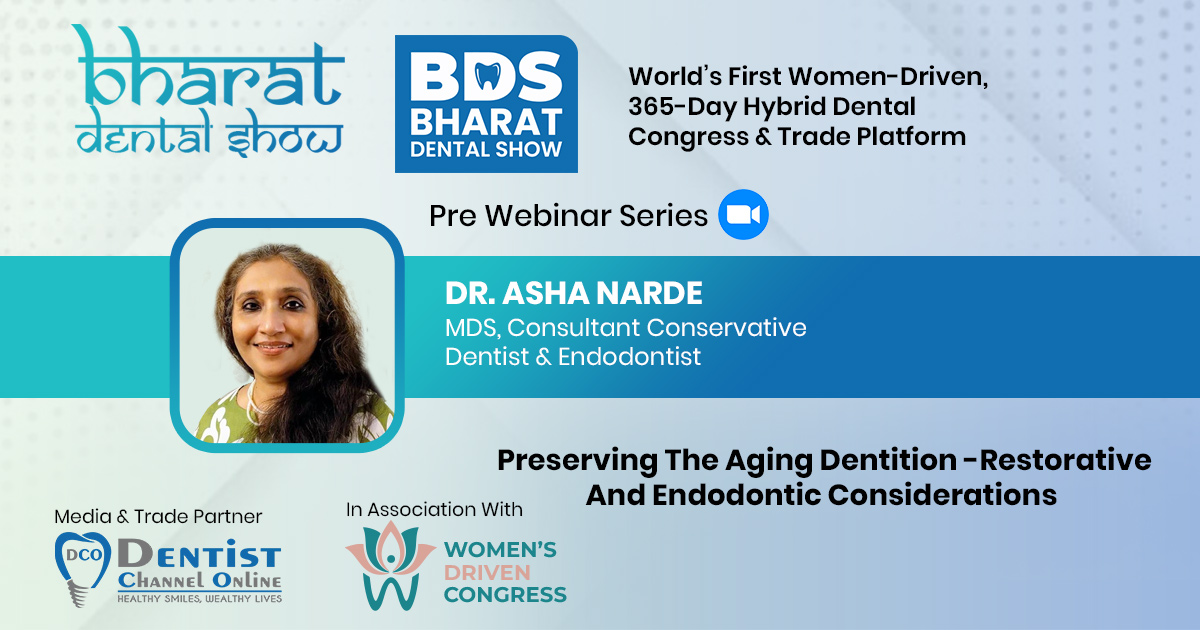
Preserving The Aging Dentition -Restorative And Endodontic Considerations

Webinar on preserving aging teeth with effective restorative and endodontic care.

  • 24 April,2026
Clinical Periodontology: Decision-Making with a Periodontist’s Mindset

A webinar on clinical decision-making in periodontology using a periodontist’s diagnostic and treatment planning approach.

  • 25 April,2026
Timing is Everything: Early diagnosis and prevention of malocclusion and Dentofacial abnormalities in children.

Webinar on early diagnosis & prevention of malocclusion & dentofacial abnormalities in children for better long-term oral development.

  • 29 April,2026
Geriatric Dentistry simplified with Diode Lasers

A practical webinar on simplifying geriatric dental care using diode lasers for minimally invasive, efficient, and patient-friendly clinical outcomes.

  • 9 May,2026
Full Mouth Rehabilitation: From Diagnosis to Predictable Outcomes

A comprehensive webinar on full mouth rehabilitation focusing on diagnosis, case selection, and achieving predictable functional and esthetic outcomes.

  • 16 May,2026
Aligner Intelligence: From Case Selection to Clinical Success

Comprehensive webinar focused on mastering clear aligner workflows—from accurate case selection to predictable clinical outcomes and treatment success.

  • 17 May,2026
FMR: Restoring Function and Aesthetics

Advanced FMR session on Restoring function and aesthetics in complex Dental Cases.

  • 24 May,2026
Smart Materials

A Dental Webinar on Smart Saterials that enhance Performance and Patient outcomes.

  • 31 May,2026
Hidden Anatomy: Cracking the Code of Complex Root Canals

Master the identification and management of hidden anatomical variations in root canals to improve endodontic success and avoid missed canals.