
 Dr.Melvin Mendonca,DBA,DJV
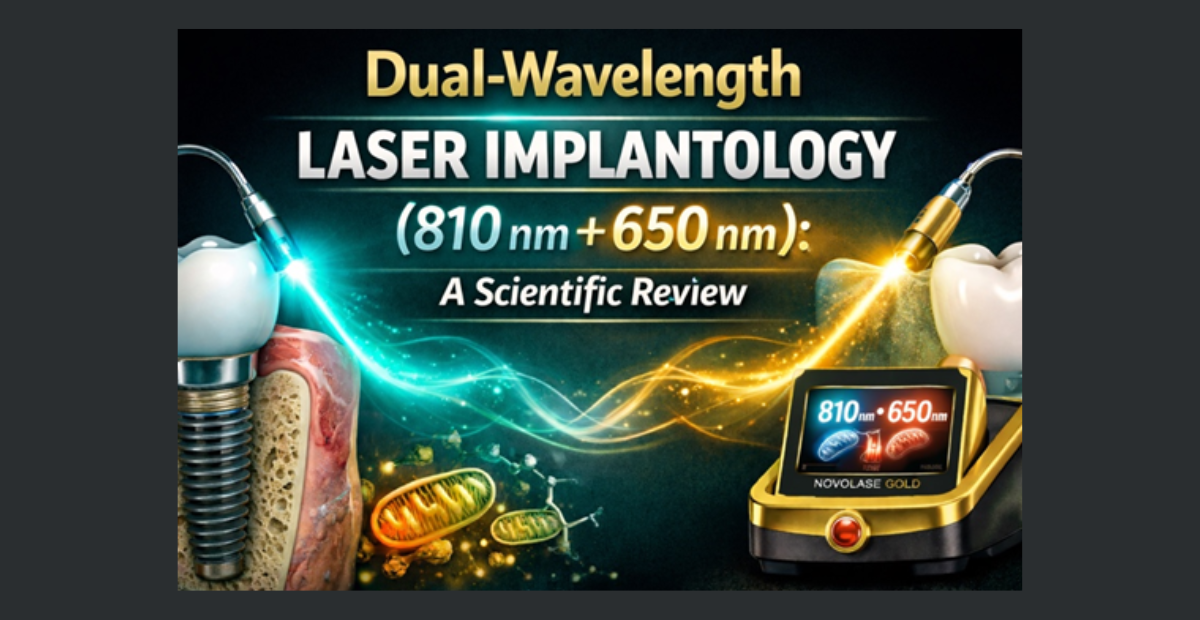
Dual-Wavelength Laser Implantology (810 nm + 650 nm): A Scientific Review
The Scientific Basis of 810 nm + 650 nm Diode Laser Technology in Dental Implant Surgery
Authors
Dr. Melvin Mendonca, DBA/DJV
DentistChannel.online – Global Dental Education Platform
Prof. Dr. Chandrashekar Yavagal
Department of Laser Dentistry and Implantology
Abstract
The integration of laser technology into dental implantology has significantly expanded treatment possibilities in soft-tissue management, bacterial decontamination, and photobiomodulation-assisted healing. Diode lasers are among the most widely used laser systems in dentistry due to their compact design, affordability, and favorable tissue interaction properties. Among these, dual-wavelength systems combining near-infrared (810 nm) and red spectrum (650 nm) diode lasers have emerged as promising tools for both surgical and biological applications.
The 810 nm wavelength is primarily used for soft-tissue incision, coagulation, and microbial reduction due to its absorption in hemoglobin and melanin, while the 650 nm wavelength is commonly used in photobiomodulation therapy (PBM) to stimulate cellular metabolism, enhance mitochondrial activity, and promote tissue regeneration.
This paper reviews the scientific principles, clinical applications, and therapeutic potential of dual-wavelength diode laser technology in implant dentistry. Particular attention is given to its role in pre-operative tissue conditioning, intra-operative surgical support, post-operative healing enhancement, and peri-implant disease management.
Dental implants have become the preferred treatment modality for replacing missing teeth. Long-term success of implant therapy depends on multiple biological and mechanical factors including:
Despite improvements in implant surface technology and surgical techniques, complications such as peri-implant mucositis, peri-implantitis, delayed healing, and postoperative discomfort remain challenges in clinical practice.
Laser technology has emerged as an important adjunct in implant dentistry due to its ability to enhance surgical outcomes while minimizing tissue trauma.
Among available laser systems, diode lasers (wavelength range 630–980 nm) are widely used due to their portability, efficiency, and selective absorption in pigmented tissues.
Recent advancements have introduced dual-wavelength diode laser systems combining 810 nm and 650 nm wavelengths, allowing clinicians to perform both surgical procedures and photobiomodulation therapy using a single platform.
Laser-tissue interaction is determined primarily by wavelength and tissue chromophores.
Key chromophores involved in dental laser absorption include:
Near-infrared wavelengths such as 810 nm are highly absorbed by hemoglobin and melanin, enabling efficient soft-tissue incision and coagulation.
Red wavelengths such as 650 nm interact primarily with mitochondrial chromophores and stimulate cellular activity through photobiomodulation.
This biological mechanism increases:
These cellular responses contribute to accelerated tissue healing following implant surgery.
The 810 nm diode laser is widely used in dental surgery due to its favorable tissue penetration and strong absorption by hemoglobin.
Clinical Applications
Common implant-related applications include:
Surgical Advantages
Studies have demonstrated several benefits of diode laser surgery compared with conventional scalpel techniques:
Laser-assisted implant uncovering procedures have been shown to allow faster prosthetic workflow due to reduced bleeding and improved soft-tissue stability.
Photobiomodulation therapy (PBM), previously known as low-level laser therapy (LLLT), uses low-intensity light to stimulate biological processes.
The 650 nm wavelength falls within the red light spectrum and is commonly used for PBM due to its ability to stimulate mitochondrial activity.
Biological Effects of PBM
Research demonstrates that PBM therapy can promote:
In implant dentistry, these effects may support faster tissue healing and improved patient comfort after surgery.
Combining surgical and photobiomodulation wavelengths creates a synergistic approach to implant therapy.
Surgical Phase
The 810 nm wavelength is used for:
Healing Phase
The 650 nm wavelength supports:
This dual-wavelength strategy enables clinicians to address both mechanical and biological aspects of implant therapy.
Laser therapy can be used prior to implant surgery to improve tissue conditions.
Tissue Conditioning
Laser irradiation reduces gingival inflammation and improves tissue quality.
Bacterial Reduction
Laser energy can significantly reduce microbial populations within periodontal pockets.
Photobiomodulation
Pre-operative PBM may stimulate tissue metabolism and improve healing potential.
During implant surgery, diode lasers provide several clinical advantages.
Hemostasis
Laser coagulation reduces bleeding and improves surgical visibility.
Precision
Laser incisions allow precise tissue removal while preserving surrounding structures.
Reduced Trauma
Laser energy seals lymphatic vessels and nerve endings, minimizing postoperative swelling and discomfort.
Post-surgical PBM therapy can significantly enhance healing.
Clinical studies report:
PBM therapy may also improve patient satisfaction and recovery time following implant surgery.
Peri-implant mucositis and peri-implantitis are inflammatory diseases associated with dental implants.
Laser therapy may assist in treatment through:
Although laser therapy should not replace mechanical debridement, it may serve as an effective adjunct in peri-implant disease management.
Laser-assisted implantology continues to evolve with the development of:
Future research should focus on standardized protocols for laser-assisted implant surgery and peri-implant therapy.
Dual-wavelength diode laser systems combining 810 nm surgical capability with 650 nm photobiomodulation therapyrepresent an important advancement in implant dentistry.
This combination allows clinicians to enhance surgical precision while simultaneously supporting biological healing mechanisms.
Laser technology therefore has the potential to improve both clinical outcomes and patient comfort in implant therapy.
References (PubMed Indexed Literature)
Clinical Application Example
Modern dual-wavelength systems such as Novolase Gold, powered by Combo Coherence™ technology (810 nm + 650 nm, 10.3 W), integrate these scientific principles into a single clinical platform.
These systems enable clinicians to perform:
Novolase Gold is designed according to international standards including ISO, CE, WHO-GMP, RoHS, and ISO 9001 certifications, ensuring safety, reliability, and sustainability in clinical practice.
For more information:





Darlisha - 4 months ago