
Certificate of participation with 1 CME is available
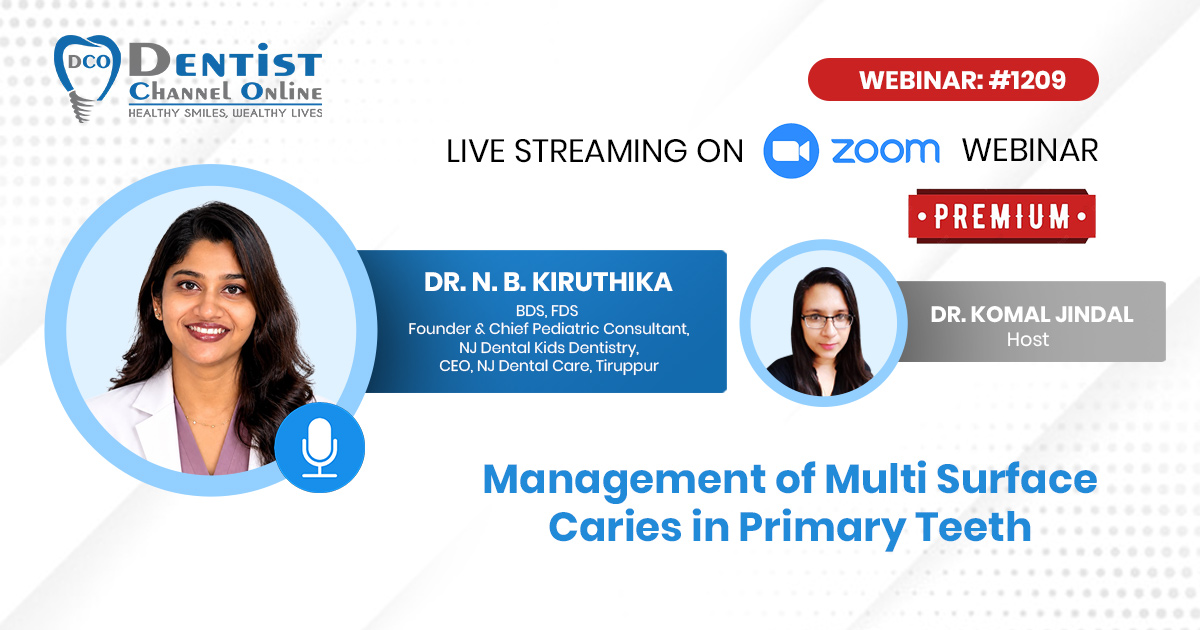
Multisurface caries in primary teeth is one of the most common yet challenging clinical conditions encountered in pediatric dentistry, owing to the unique anatomical, morphological, and physiological characteristics of deciduous teeth. The rapid progression of dental caries, thinner enamel and dentin, relatively larger pulp chambers, and the close proximity of the pulp to the external tooth surface make the management of extensive carious lesions particularly challenging. Early childhood caries involving multiple surfaces can significantly compromise the structural integrity of primary teeth, leading to pain, infection, difficulty in mastication, nutritional disturbances, altered speech patterns, and a negative impact on the child's overall quality of life. Successful management requires more than simply restoring the lost tooth structure; it involves a comprehensive, individualized treatment approach based on the child's age, caries risk assessment, extent of lesion, pulpal status, restorability of the tooth, behavioural cooperation, and expected remaining lifespan of the primary dentition. Various treatment modalities, including selective caries removal, indirect pulp treatment, pulpotomy, pulpectomy, and full-coronal restorations, play an important role in managing multisurface carious lesions. While conventional restorative materials such as glass ionomer cement and composite resins may be suitable for selected cases, full-coronal coverage using stainless steel crowns or aesthetic alternatives such as zirconia crowns offers better protection and long-term durability in extensively damaged primary teeth. In addition, minimally invasive approaches, such as the Hall technique and silver diamine fluoride application, may be considered in appropriately selected cases depending on lesion characteristics and clinical indications. Behaviour guidance techniques, effective pain management, and parental involvement are equally important in ensuring successful treatment outcomes, particularly in young and anxious children. Furthermore, addressing the underlying disease process through dietary counselling, oral hygiene reinforcement, topical fluoride application, and regular recall visits is essential to prevent recurrence and the development of new carious lesions. This abstract highlights the importance of a comprehensive, evidence-based and child-centred approach to the management of multisurface caries in primary teeth, emphasizing the preservation of primary dentition until its natural exfoliation while maintaining function, aesthetics, comfort, and the overall oral health-related quality of life of the child.
The webinar highlights the clinical challenges and evidence-based approaches to managing multisurface caries in primary teeth, emphasizing early diagnosis, comprehensive treatment planning, and tooth preservation. It explores various treatment modalities, including minimally invasive caries management, pulp therapy, and full-coronal restorations such as stainless steel and zirconia crowns. Special emphasis is placed on selecting appropriate treatment based on pulpal status, restorability, child's age, and behavioural cooperation, along with preventive strategies and parental education to ensure long-term success.
Date: 21/12/2026 |08:00 PM IST








Amanda - 1 day ago